


Learning Animal Reiki begins with making space for Reiki in your own life. Before sharing the practice with an animal, you are invited to experience it through your own hands, attention, and presence.
Level 1 attunement marks the beginning of this practice. Self-Reiki gives you a way to develop that connection through regular experience.
Together, they form a foundation you can return to throughout your journey. Whether you are practising alone or sitting quietly with an animal, that foundation remains close: openness to Reiki, kindness toward yourself, and a willingness to be present.
Understanding Level 1 Attunement
In Usui Reiki, attunement is a sacred process offered by a Reiki Master to initiate a student into Reiki practice. It is traditionally understood as opening or strengthening the student’s connection with universal life-force energy, enabling them to become a conduit for Reiki.
You do not need previous Reiki experience to receive Level 1 attunement. You also do not need to develop a particular sensation or enter an unusual state of consciousness beforehand.
The Master guides the attunement process; your part is to receive it with willingness and openness.
Within this Animal Reiki course, Level 1 attunement supports both your personal self-Reiki practice and your learning to share Reiki with animals. The animal-focused teaching builds upon this Usui Reiki foundation.
Attunement procedures vary among Reiki lineages. Your teacher should explain the form they offer, how to prepare, and how the session will take place. If you receive a distance attunement, they should also provide clear arrangements for the time and setting.
The instructions in this chapter help you prepare and establish your practice. Receiving an attunement is a separate experience guided by your Reiki Master.
Preparing for Your Attunement
Preparation can be simple. Choose an arrangement that allows you to feel comfortable, attentive, and unhurried.
Before your attunement:
- Read your teacher’s instructions and ask about anything unclear.
- Set aside the agreed time, with a little space afterward before returning to other activities.
- Choose comfortable clothing and a supported seated position.
- If receiving at home, arrange a quiet place where interruptions are unlikely.
- Attend to ordinary needs, such as drinking water or having a meal, so that physical discomfort does not distract you.
You may wish to begin with a few minutes of Gassho, bringing your palms together gently in front of your chest. Let your breathing settle naturally.
A simple intention is enough:
I welcome Reiki into my life. May this practice support my growth and help me share presence and compassion with animals.
You can use your own words. An intention expresses your willingness; it does not need to be perfectly phrased.
There is no need to create an elaborate atmosphere. A candle, gentle music, or a meaningful object may help you settle, but these are personal choices.
Receiving Your Attunement
During attunement, follow your teacher’s guidance and allow yourself to receive.
You may notice warmth, tingling, a sense of spaciousness, emotion, or quiet. You may experience subtle changes that are difficult to describe. You may also notice very little.
Allow the experience to be your own. Comparing it with another student’s account can draw your attention away from what is actually unfolding for you.
If thoughts arise, you can notice them and gently return to your breath or the feeling of your supported body. You do not need to maintain perfect concentration.
If your position becomes uncomfortable, let your teacher know or make a gentle adjustment according to the arrangements for your session. Receiving a sacred practice does not require enduring physical strain.
Integrating the Experience
After attunement, give yourself a little time to settle.
You might sit quietly, drink water, take a gentle walk, or write a few lines about your experience. Let your immediate needs guide you.
Some students feel inspired to practise at once. Others appreciate a period of quiet before beginning. Follow your teacher’s guidance while allowing room for your own pace.
You may hear about a 21-day integration period in Reiki teaching. Some teachers use this as a helpful structure for daily practice. It can offer a meaningful beginning, but your relationship with Reiki continues beyond a particular number of days.
Avoid turning integration into a search for signs. A quiet day can be as much a part of your learning as a memorable session.
If you feel unwell, respond to your needs in the ordinary way. You do not need to interpret discomfort as spiritual cleansing or as evidence that the attunement is working.
The most useful next step is to begin a gentle, consistent self-Reiki practice.
Why Self-Reiki Belongs in Animal Reiki
Self-Reiki gives you direct experience of the practice you will later share.
Through your own sessions, you become familiar with resting your hands, allowing time, noticing your expectations, and remaining present when an experience is subtle.
You also learn to recognise your own comfort. You may discover that one position feels restful while another strains your shoulders, or that a short session suits you better on a busy day.
This familiarity helps you approach Animal Reiki with patience. You have somewhere to return when you feel uncertain or begin trying too hard.
Your personal practice also makes room for your own care. Caring for animals can involve joy, responsibility, worry, and grief. Self-Reiki offers a practice in which your own experience receives attention too.
You do not need to become perfectly calm before sharing Reiki. You are learning to recognise how you arrive and to meet yourself with honesty and kindness.
A Self-Reiki Practice: Step by Step
After receiving your Level 1 attunement, you can begin using the following sequence. Adapt your posture and hand positions to suit your body.
1. Choose a Comfortable Position
Sit in a chair with your back supported, or lie down somewhere comfortable.
Use cushions if they help support your arms, knees, or neck. Loosen anything that feels restrictive.
Your position should allow you to rest rather than hold yourself rigidly.
2. Settle with Gassho
Bring your palms together gently in front of your chest.
Let your attention rest on the contact between your hands. Breathe naturally, allowing yourself a few quiet moments to arrive.
If Gassho is uncomfortable, rest your hands in your lap instead.
3. Form Your Intention
Silently invite Reiki into your practice.
For example:
May Reiki flow for my highest good. May I receive this practice with openness and compassion.
You may also use a shorter invitation:
I welcome Reiki.
Let the intention be sincere and simple.
4. Rest Your Hands on Your Body
Begin with a comfortable hand position. Place your hands gently, without pressing or manipulating the body.
You can practise through clothing. If direct contact feels uncomfortable, hold your hands slightly above the area or choose another position.
Allow your hands to rest. There is no need to tense them or deliberately produce heat.
5. Allow Time in Each Position
Remain in each position for a few minutes, or for as long as feels comfortable.
Let Reiki flow without trying to force a particular result. Your attention may rest on your hands, your breathing, or the sense of your body being supported.
When your mind wanders, gently return. Wandering thoughts are part of learning to sit with yourself.
6. Move Through Your Chosen Positions
Move your hands slowly to the next area.
You may follow the sequence below or use fewer positions. If a position requires effort, adjust it or leave it out.
The sequence provides a starting point. With experience, you can become more responsive to what feels appropriate in a particular session.
7. Close with Gratitude
When you feel ready to finish, return your hands to your lap or to Gassho.
Take a few natural breaths and acknowledge the time you have given yourself.
You might silently say:
Thank you for this practice.
Open your eyes if they have been closed. Give yourself a moment before standing or moving into another activity.
A Comfortable Self-Reiki Hand Sequence
These positions offer a practical route through the body. They are flexible resting places for your hands rather than a sequence you must perform exactly.
Head
Rest your hands lightly over your forehead or along the sides of your head.
Keep pressure away from your eyes. If lifting your arms feels tiring, support your elbows with cushions or begin at your chest instead.
Upper Chest
Place your hands comfortably on your upper chest, below the collarbones, or let one hand rest over the centre of your chest.
Choose a placement that allows your shoulders to soften.
Upper Abdomen
Rest your hands over the upper abdomen, below the ribs.
Allow the breath to move naturally beneath your hands. There is no need to deepen or control it.
Lower Abdomen
Move your hands to the lower abdomen.
Let them rest gently over clothing, using a position that feels comfortable and respectful to you.
Shoulders or Lower Back
If easily accessible, place a hand on each shoulder or rest your hands around the sides of your waist and lower back.
Skip these positions if reaching creates strain. You can remain at the abdomen or another comfortable area.
Knees or Legs
When seated, rest your hands on your knees or thighs.
This can be a restful final position, especially when you prefer to keep your arms supported.
You can also use a very short sequence: one hand on your chest and one on your abdomen, followed by both hands resting on your thighs.

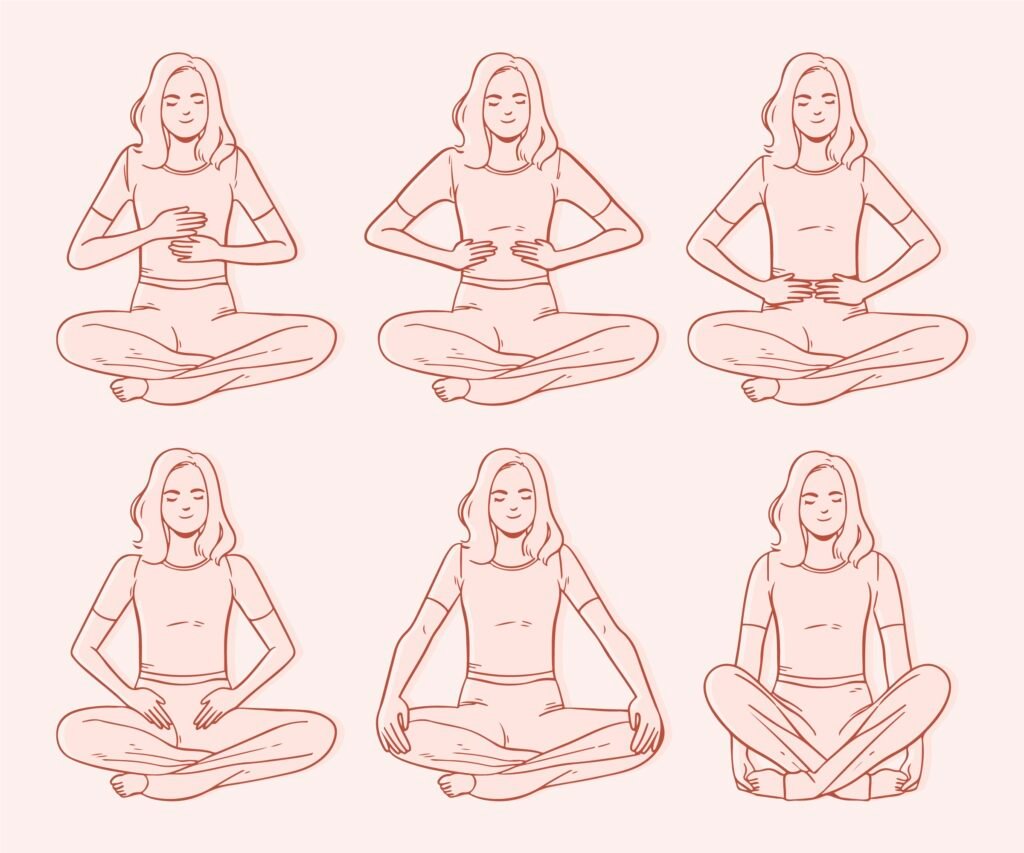
This illustration shows selected front-body self-Reiki hand positions. Continue with the upper-back and lower-back positions described in the text.
Understanding What You Notice
During self-Reiki, your hands may feel warm, cool, gently tingling, or unchanged. Sensations can differ between positions and from one day to another.
Warmth may feel like a comforting sense of connection. It does not, by itself, tell you that an area has a blockage or a particular condition.
You may feel relaxed, emotional, thoughtful, or simply aware of being still. Rather than immediately assigning meaning to every experience, give yourself room to notice it.
Your practice does not depend on producing strong sensations. Regular experience can deepen your familiarity with Reiki even when individual sessions are quiet.
If you notice discomfort from your posture or hand placement, adjust. If emotion arises, you can remain with the practice gently or close and give yourself space.
Finding Your Own Practice Rhythm
Begin with a rhythm you can realistically maintain.
Five or ten minutes may be a useful starting point. When you have more time, you might explore a longer session with several hand positions.
A brief morning practice can help you begin the day with attention. An evening practice may offer a quiet transition toward rest. Choose the time that fits your life.
Consistency grows through returning. If you miss a day, resume when you can, without treating the interruption as failure.
Over time, you may find that Gassho, the Five Reiki Principles, and self-Reiki support one another naturally. The principles bring awareness into daily life; self-Reiki gives you dedicated time to sit within that awareness.
Reflection
After a few self-Reiki sessions, consider:
- Which positions allow my body to rest comfortably?
- What do I notice when I stop trying to create a particular experience?
- How do I respond when a session feels quiet or different from what I expected?
- What amount of practice feels sustainable in my everyday life?
A few honest sentences are enough. These reflections help you become familiar with your own experience as you prepare to share Reiki with animals.
Attunement opens the beginning of your practice. Each time you return to self-Reiki, you give that beginning room to deepen.
In the next chapter, you will turn your attention toward animal communication—learning how to recognise and respect the choices of the animals with whom you practise.
Self-Reiki image designed by Freepik