

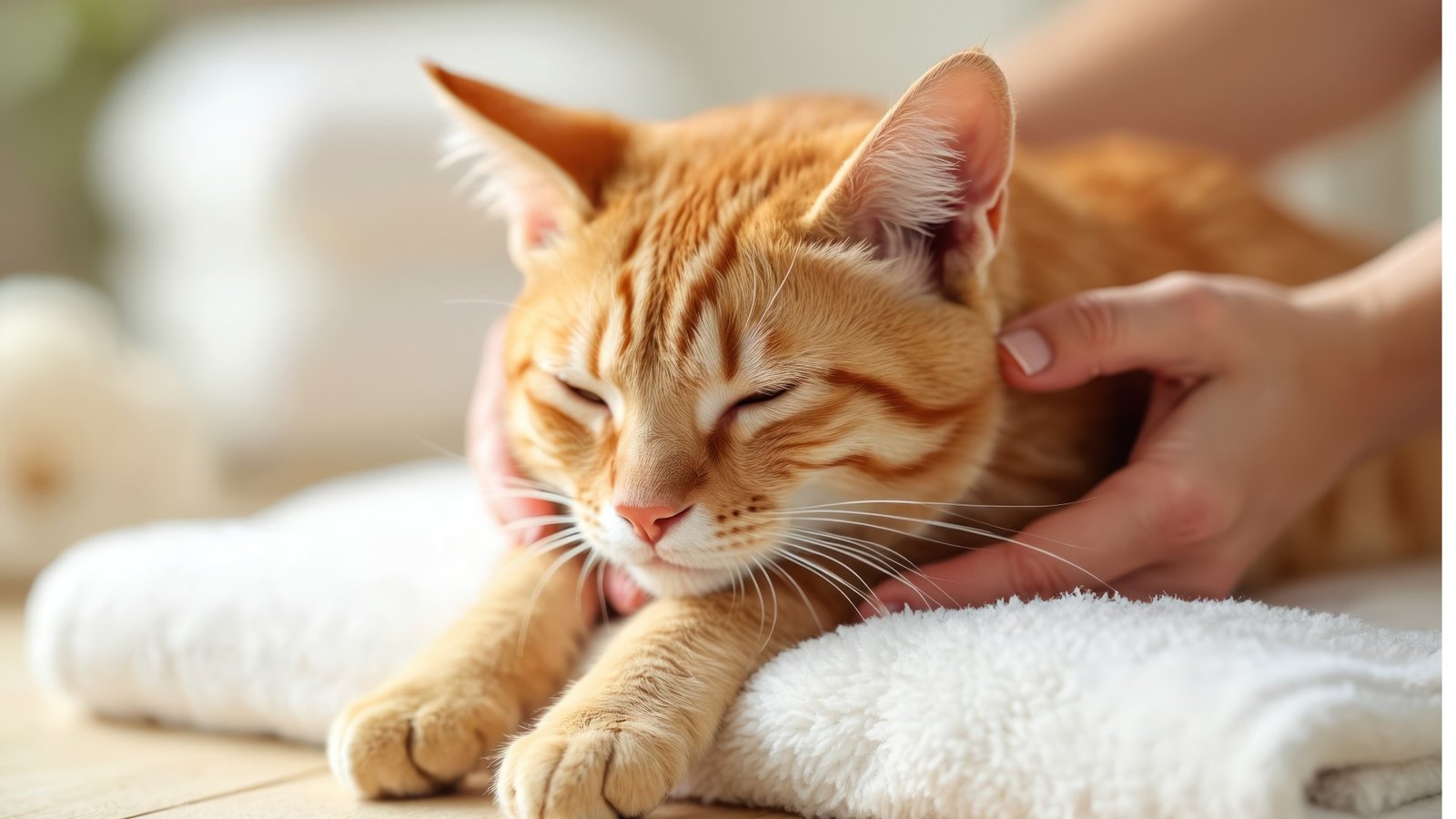
An Animal Reiki session often includes a relationship with two beings: the animal and the person who cares for them.
The caregiver knows the animal’s routines, preferences, history, and ways of communicating. Their understanding can help you create a session that feels familiar and welcoming. In turn, your Reiki practice can offer the animal and caregiver a space of calm, connection, and energetic support.
Reiki works holistically. It may support the animal across physical, emotional, mental, energetic, and spiritual dimensions, encouraging relaxation, balance, comfort, and the body’s natural healing processes. Its effects may be subtle or deeply felt, and each animal receives Reiki in their own way.
Working respectfully with the caregiver allows this potential to be offered with clarity and trust.
Receiving the Caregiver’s Permission
Before offering Reiki to someone else’s animal, receive permission from the person responsible for their care.
Explain the practice simply:
Animal Reiki is a gentle energy practice. I will offer Reiki for your animal’s highest good, beginning without physical contact. Your animal will be free to approach, move away, rest elsewhere, or welcome touch in their own way.
The caregiver’s permission allows the session to take place. The animal’s choices then guide how the session unfolds.
Before beginning, agree on practical details such as:
- Where the session will take place
- Approximately how long it may last
- Whether the caregiver will remain nearby
- Whether the practice will be entirely hands-off or may include welcomed touch
- Any fee or scheduling arrangement
- Whether notes or photographs will be taken
A clear beginning helps everyone enter the session with shared expectations.
Learning from the Caregiver
Ask the caregiver about the animal as an individual.
Useful questions may include:
- Where does the animal usually feel most comfortable?
- How do they normally respond to unfamiliar people?
- Do they enjoy physical contact?
- Are there areas they do not like touched?
- How do they show that they want more space?
- Are there any mobility or sensory needs to consider?
- Will other animals be present?
- Are there handling or safety instructions you should follow?
You do not need to conduct a lengthy interview. Ask for the information that will help you share the space respectfully.
The caregiver may also tell you why they are seeking Reiki. The animal might be moving through a life change, recovering from an illness or procedure, experiencing stress, adjusting to a new home, ageing, or approaching the end of life. Reiki may also be offered simply to support general well-being and deepen the bond between animal and caregiver.
Listen without rushing to define what Reiki must accomplish. Hold the caregiver’s intention while remaining open to Reiki flowing where it is most needed.
Describing the Potential of Reiki
When speaking with caregivers, neither diminish Reiki nor promise a particular outcome.
You can explain:
Reiki is a Japanese energy practice in which the practitioner serves as a conduit for universal life-force energy. It works holistically and may support relaxation, energetic balance, emotional ease, physical comfort, natural healing, and a deeper sense of connection. Because every animal and situation is different, we allow Reiki to work according to the animal’s highest good rather than directing it toward a fixed result.
This honours Reiki’s potential while leaving room for mystery and individual experience.
Some animals become deeply relaxed during a session. Others grow more alert, change positions, seek companionship, fall asleep, or continue their usual activities. An animal does not have to display a particular response for Reiki to be meaningful.
Let the caregiver know beforehand that Animal Reiki is not measured by how long the animal remains still or how close they come to the practitioner. The animal’s freedom to participate in their own way is part of the practice.
The Caregiver’s Presence
Some animals feel more comfortable when their caregiver remains nearby. Others may interact differently when the caregiver is present.
There is no single correct arrangement.
If the caregiver stays, they can sit quietly, continue a calm activity, or simply share the space. They do not need to meditate or understand Reiki in detail.
The animal may move between the practitioner and caregiver, seek familiar contact, or rest beside the person they trust. Allow these interactions to become part of the session.
A caregiver may also feel worried, tired, or emotional, especially when the animal is unwell or nearing the end of life. Do not suggest that their feelings are blocking Reiki or causing the animal’s response. Meet them with the same compassion you bring to the animal.
Sometimes the shared stillness of a Reiki session supports both. The caregiver may feel calmer, more present, and more deeply connected with their animal, even though the session’s primary intention remains with the animal.
Holding an Intention Without Controlling the Outcome
The caregiver may have a particular hope for the session. They may wish for the animal to feel calmer, rest more comfortably, recover strength, adjust to change, or experience peace.
You can acknowledge this hope and include it within the session intention:
May Reiki support this animal’s well-being and flow in the way that serves their highest good.
Holding an intention is different from demanding an outcome. Reiki has its own intelligence and is not limited by the practitioner’s ideas about what should happen.
This is especially important when the caregiver is facing uncertainty. You do not need to predict the result or explain the deeper meaning of the animal’s experience. Your role is to offer Reiki with trust, humility, and presence.
Working Alongside Veterinary Care
Reiki and veterinary care can support an animal in different and complementary ways. Reiki may be offered before or after veterinary appointments, during recovery, alongside ongoing treatment, or as part of comfort-focused and end-of-life care. It does not require changes to prescribed medication or treatment, and a Reiki practitioner who is not a veterinarian does not diagnose conditions or make veterinary decisions. If an animal has concerning symptoms or needs medical attention, the caregiver should consult a qualified veterinary professional while Reiki may continue as supportive care when appropriate.
This relationship need not be framed as a conflict. Veterinary medicine can address the animal’s medical needs, while Reiki supports the whole being through universal life-force energy.
Communicating After the Session
After the session, share a brief and grounded account of what occurred.
Begin with what you observed:
She remained in her bed at first, then came closer and rested beside me. I kept the session hands-off.
Or:
He welcomed a hand on his shoulder for several minutes, then moved across the room. I continued offering Reiki from where I was sitting.
You may also share your own experience:
I felt warmth and a gentle pulsing in my hands during the session.
Warmth, tingling, inner imagery, emotion, or intuitive impressions may be meaningful aspects of Reiki practice. Share them with discernment and make clear when something was an inner impression rather than an observable event.
For example:
I had an impression of spaciousness and release during the session. That was my intuitive experience rather than something I can confirm about her physical condition.
There is no need to explain every movement or sensation. Sometimes the most honest description is simply that the session felt quiet, peaceful, or subtle.
Speaking About Changes After Reiki
A caregiver may notice that the animal sleeps, drinks water, becomes playful, seeks closeness, or behaves differently after a session.
These experiences can be welcomed without assigning a definite explanation too quickly.
You might say:
Continue observing how they feel and behave over the next day or two. Reiki can continue to integrate in its own way.
If the caregiver reports a positive change, receive it with gratitude. You do not need to claim personal credit. The practitioner is a conduit; Reiki, the animal, and the animal’s own healing processes remain at the centre.
If no visible change occurs, this does not mean the animal rejected Reiki or that the session lacked value. Some effects are subtle, gradual, internal, or different from what the caregiver expected.
Privacy and Respect
Caregivers may share personal stories about the animal’s health, behaviour, history, or place within the family. Treat this information with care.
Ask permission before:
- Photographing or recording the animal
- Sharing the animal’s story
- Publishing a testimonial
- Using session details in a case study
- Posting identifying information online
Permission to offer Reiki is not permission to use the animal’s image or story publicly.
When recording a session for your own practice, include only the information you need and keep the record secure. If a case is later used for teaching, remove identifying details unless the caregiver has expressly agreed to their inclusion.
Maintaining Clear Boundaries
A Reiki practitioner can be warm, compassionate, and deeply present while maintaining a clear role.
This includes:
- Explaining what your Reiki service includes
- Agreeing on fees and scheduling in advance
- Keeping personal information private
- Working within your experience and training
- Following the caregiver’s handling instructions
- Recognising when another kind of professional support is needed
- Avoiding promises that Reiki will create a specific result
Clear boundaries protect the trust within the relationship. They also allow Reiki to be offered for what it truly is: a sacred energy practice with the potential to support healing, balance, connection, and well-being.
Supporting the Human–Animal Bond
One of the gifts of Animal Reiki is the space it creates between an animal and their caregiver.
In everyday life, caregiving can become centred on feeding, medication, appointments, behaviour, and practical responsibilities. Reiki invites a different kind of encounter—one in which nothing needs to be fixed in that moment.
The caregiver may simply sit with the animal, notice their presence, and remember the relationship beneath all the tasks of care.
For an ageing or ill animal, this shared presence can be especially meaningful. Reiki may become a quiet way of expressing love without asking the animal to respond.
The practitioner does not stand outside this relationship as an authority over it. You enter respectfully, offer Reiki, and support the space in which animal and caregiver can reconnect.
Reflection
Consider:
- How would I explain Reiki’s potential without guaranteeing an outcome?
- What information do I need from a caregiver before beginning?
- How can I respect both caregiver permission and animal choice?
- How would I share an intuitive impression with humility?
- Can I support a caregiver’s hope without deciding what Reiki must accomplish?
- How can Reiki help deepen the connection between an animal and their caregiver?
Working with caregivers is not separate from Animal Reiki. It is one of the ways the Reiki Principles become visible through honesty, gratitude, kindness, and respect.
In the final chapter of Animal Reiki Level 1, you will bring the course together through personal practice, session records, case reflections, and the requirements for completing this level.