

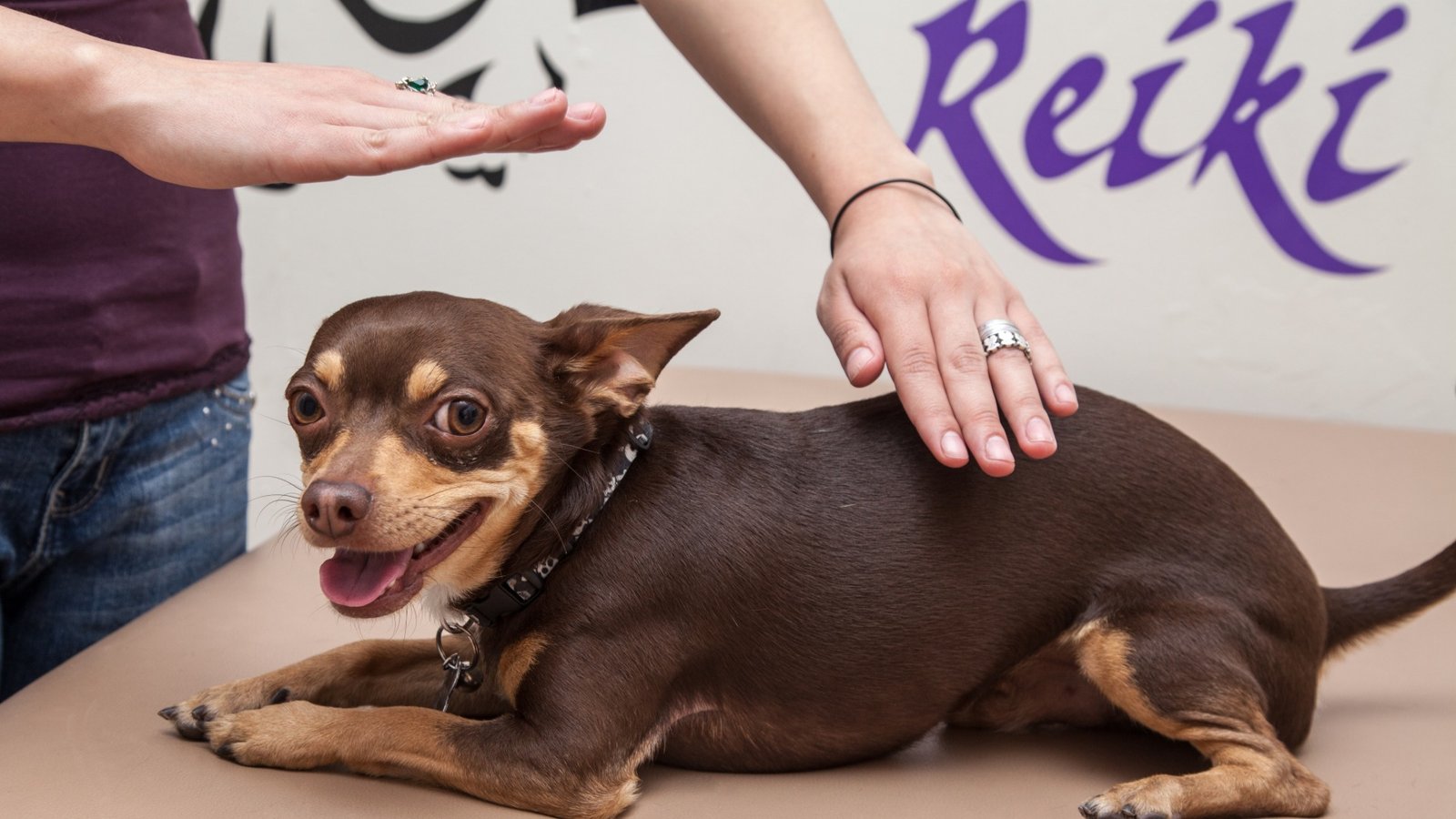
Animal Reiki Level 1 gives you a foundation: an understanding of Reiki and its Usui roots, the Five Reiki Principles, Level 1 attunement, self-Reiki, animal communication, in-person practice, and respectful relationships with caregivers.
Completing the course is not the end of this learning. It marks the point at which knowledge begins to deepen through experience.
Each animal will teach you something different about presence, connection, patience, and choice. Your task is not to make every session look the same, but to continue practising with openness and to reflect honestly upon what unfolds.
Returning to Self-Reiki
Your Animal Reiki practice begins with your own relationship with Reiki.
Continue offering Reiki to yourself regularly after your attunement. Self-Reiki helps you become familiar with the flow of the practice without needing to interpret another being’s experience.
It can also reveal your habits as a practitioner. You may notice a tendency to rush, search for sensations, expect a particular outcome, or doubt a quiet session. With practice, you learn to soften these expectations and trust Reiki more deeply.
Your self-Reiki practice does not need to follow a perfect schedule. A brief session offered with sincere attention can be meaningful. Longer sessions give you opportunities to explore different hand positions and remain with the practice over time.
Consistency develops through returning.
Building Experience Gradually
Begin with animals you know and in settings where you can practise comfortably.
You might first offer Reiki to an animal in your own household or to an animal whose caregiver understands that you are completing Level 1 practice. Familiar surroundings allow you to focus on your own presence while learning how the animal participates.
In your early sessions:
- Begin hands-off.
- Use a simple intention.
- Let the animal choose their distance.
- Include touch only when it is welcomed.
- Allow movement and ordinary activity.
- Close when the session feels complete.
- Reflect afterward without judging the session as a success or failure.
You do not need to seek unusual or complex circumstances to prove your ability. Experience grows through careful attention to ordinary sessions.
One animal may teach you about shared stillness. Another may teach you to release your attachment to touch. A third may show you how Reiki can remain present within movement and change.
Keeping a Practice Log
A practice log helps you notice your development over time. It is not a record of whether you produced the desired result. It is a place to document what you offered, what you observed, and what you learned.
For each Animal Reiki session, record:
- Date and setting
- Animal: Species, age if known, and a non-identifying name or initial
- Session intention
- Approximate duration
- Starting position: Where you and the animal were
- Form of practice: Hands-off, welcomed touch, or both
- Observable participation: Movement, proximity, resting places, accepted contact, or changes during the session
- Your experience: Sensations, emotions, thoughts, or intuitive impressions
- Adaptations: How you responded to the animal or environment
- Reflection: What you learned and what you might approach differently next time
Keep observation and interpretation distinguishable.
For example:
The cat moved from the windowsill and lay beside my chair after approximately ten minutes.
This records an observable event.
I felt that she was becoming more open to the Reiki connection.
This records your interpretation.
Both may belong in your journal when they are clearly identified.
Learning Through Case Reflection
A case study is more than a description of the animal’s behaviour. It asks you to consider how the teachings of Level 1 shaped your choices.
The following examples show how different sessions may become valuable learning experiences.
Case 1: The Dog Who Remained Across the Room
A practitioner began hands-off Reiki while a dog remained in their bed on the opposite side of the room. The dog looked toward the practitioner several times but did not approach. After twenty minutes, the dog lowered their head and continued resting.
The practitioner did not call the dog closer or move toward the bed. The session remained hands-off from beginning to end.
The important lesson was not whether the dog approached. It was the practitioner’s willingness to offer Reiki without requiring physical closeness as proof of connection.
Case 2: The Cat Who Changed Their Mind About Touch
A cat approached the practitioner and settled beside them. After observing the cat’s response, the practitioner rested one hand lightly on the cat’s shoulder.
Several minutes later, the cat shifted away from the hand but remained nearby. The practitioner returned both hands to their lap and continued offering Reiki without touch.
This session demonstrated that willingness can change. The cat’s earlier acceptance of contact did not need to continue for the rest of the session.
Case 3: The Rabbit Who Remained Hidden
A rabbit stayed inside a familiar shelter within their enclosure. The practitioner sat outside the enclosure and offered Reiki quietly without reaching inside or asking the caregiver to bring the rabbit out.
The rabbit remained hidden throughout the session.
The practitioner initially wondered whether anything had happened, then recognised that Reiki had been offered without removing the animal’s sense of security. The practice was complete even without a visible response.
These examples are not models of how a dog, cat, or rabbit will always behave. They demonstrate how presence, choice, and flexibility can guide different encounters.
Reflecting on Your Development
After several sessions, look across your practice logs rather than evaluating each one in isolation.
Consider:
- Am I becoming more comfortable with hands-off Reiki?
- Can I remain present when an animal does not approach?
- Do I recognise when I am hoping for a dramatic response?
- Am I able to release touch when the animal moves away?
- How do I respond when the session unfolds differently from my plan?
- What sensations or patterns do I notice in my own Reiki practice?
- How have the animals changed my understanding of connection?
- Where do I still need more experience?
Honest reflection is not self-criticism. It helps you recognise both your growth and the places where continued practice may deepen your confidence.
Suggested Level 1 Practice Path
To integrate the teachings in this manual, complete the following foundation:
- Read and reflect upon all ten Animal Reiki Level 1 chapters.
- Receive your Level 1 attunement from a qualified Reiki Master.
- Complete at least 21 self-Reiki sessions.
- Complete and document at least five Animal Reiki sessions.
- Write a final reflection on what you have learned through self-Reiki and practice with animals.
The 21 self-Reiki sessions do not need to be long or perfect. They are intended to help you establish a genuine personal relationship with Reiki.
Your five Animal Reiki sessions may involve different animals or repeated sessions with the same animal. Working with one animal over time can reveal changes in participation and deepen your understanding of the individual.
If you practise with someone else’s animal, receive the caregiver’s permission and explain that you are completing Level 1 practice.
Completing Your Animal Reiki Level 1 Certification
To receive Animal Reiki Level 1 certification from Gentle Paw Reiki, you need to:
- Finish reading the complete Animal Reiki Level 1 manual.
- Receive your Animal Reiki Level 1 attunement from Gentle Paw Reiki.
Once you have completed the manual and received your attunement, you have fulfilled the requirements for Level 1 certification.
You are not required to submit practice logs, case studies, or a written reflection. These activities are offered as tools for your own learning and development rather than as formal certification requirements.
Your 21-Day Integration
After receiving your Level 1 attunement, you should complete a 21-day integration period.
This period gives you time to integrate the attunement and begin developing a direct, personal relationship with Reiki. Self-Reiki is an essential part of the integration and should be practised each day throughout the 21 days.
Your daily session may include a complete sequence of self-Reiki hand positions or a shorter practice suited to your needs. The intention is not to perform every session perfectly, but to return sincerely to Reiki each day and allow the energy to work holistically through your physical, mental, emotional, energetic, and spiritual being.
You may also include:
- Gassho meditation
- Reflection upon the Five Reiki Principles
- A brief journal entry
- Quiet time in nature
- Animal Reiki practice when an appropriate opportunity arises
The 21-day integration is your personal responsibility and does not require the submission of practice records to Gentle Paw Reiki.
Self-Reiki as a Lifelong Practice
The 21-day integration establishes a beginning, but self-Reiki is not intended to end when those 21 days are complete.
Daily self-Reiki is highly recommended as a lifelong practice. It may support healing and balance across the physical, mental, emotional, energetic, and spiritual dimensions of your being. It also deepens your understanding of Reiki through direct experience.
As you continue practising, you become more familiar with the energy and more aware of how it moves through you. Your presence may become steadier, your sensitivity may deepen, and you may become an increasingly clear conduit for Reiki.
This personal practice naturally strengthens your work with animals. You are not relying only upon techniques or ideas about Reiki; you are sharing from a relationship with Reiki that you continue to nurture within yourself.
Some days may allow for a long session, while others may offer only a few quiet minutes. What matters is the willingness to return. Self-Reiki remains the foundation that supports your own healing, your spiritual development, and your ability to offer Reiki to other beings.
Your Scope at Level 1
After completing Animal Reiki Level 1, you have a foundation for:
- Practising self-Reiki
- Offering in-person Reiki to animals
- Working through hands-off practice and welcomed touch
- Creating a suitable shared space
- Responding to animal communication and boundaries
- Adapting sessions for different animals and environments
- Working respectfully with caregivers
- Keeping practice records and reflecting on your development
Level 1 practice does not require Reiki symbols. It centres on direct connection with Reiki through attunement, intention, presence, and the hands.
Distance Animal Reiki and the Level 2 symbols belong to the next stage of training.
Continuing After Certification
Continue self-Reiki and Animal Reiki after completing the formal requirements.
You may choose to:
- Maintain a weekly self-Reiki rhythm
- Offer regular sessions to an animal in your household
- Continue keeping a practice journal
- Revisit the Five Reiki Principles
- Practise Gassho and other foundational techniques
- Learn more about the species with whom you work
- Reflect upon the relationship between Reiki, animals, nature, and the wider living world
There is no need to rush toward the next level. Level 1 contains a complete and meaningful practice of its own.
As your experience grows, you may become less concerned with performing Reiki correctly and more able to rest within the connection itself. Your hands soften. Your expectations loosen. You become more willing to listen.
The animals remain your partners in this learning.
Choosing How to Share Animal Reiki
After receiving your Animal Reiki Level 1 certification, you may choose to offer in-person Animal Reiki professionally. Before establishing a practice or accepting paying clients, check the laws, regulations, business requirements, and permitted scope of Animal Reiki practice in your local area. Requirements differ between countries, provinces, states, and municipalities, particularly where regulations distinguish complementary animal services from veterinary medicine.
You may instead choose to practise only with your own beloved animal companions, which is equally meaningful. Offering Animal Reiki regularly can promote well-being for your animals and for you, while creating peaceful moments of shared presence. Over time, this practice can deepen trust, strengthen the bond between you, and bring Reiki naturally into your life together.
Preparing for Animal Reiki Level 2
Animal Reiki Level 2 expands the possibilities of your practice through the Level 2 attunement, the sacred Reiki symbols, and distance Reiki.
At Level 2, you will learn how Reiki can be offered beyond immediate physical proximity. This can support animals who cannot comfortably share a space with the practitioner, animals living far away, and situations in which a distance approach is especially suitable.
Before beginning formal symbol practice, you will receive the Level 2 attunement and learn the meaning and traditional use of each symbol.
Enter Level 2 when you feel grounded in the foundations of Level 1—not because your practice is perfect, but because you have begun to trust Reiki, respect the animal’s participation, and understand your role as a conduit.
Final Reflection
Take a quiet moment to recognise what you have completed.
You began by learning what Reiki is and where the Usui tradition came from. You explored the Five Reiki Principles, received attunement, and established self-Reiki as the foundation of your practice.
You then learned to meet animals as participants rather than passive recipients: to observe their communication, honour their boundaries, offer a complete session, adapt to different animals, and work respectfully with caregivers.
Now consider:
- What has Reiki come to mean through my own experience?
- What have animals taught me about presence and connection?
- How has my understanding of choice changed?
- Where have I learned to release control?
- What qualities do I wish to carry forward in my practice?
- How might Reiki deepen my sense of oneness with animals, nature, and the wider cosmos?
Animal Reiki begins with connection—the recognition that we are not separate from the lives around us.
Offer Reiki with compassion. Practise with humility. Remain open to mystery. Let each animal meet the energy in their own way.
Your Level 1 journey is complete, and your practice is beginning.