

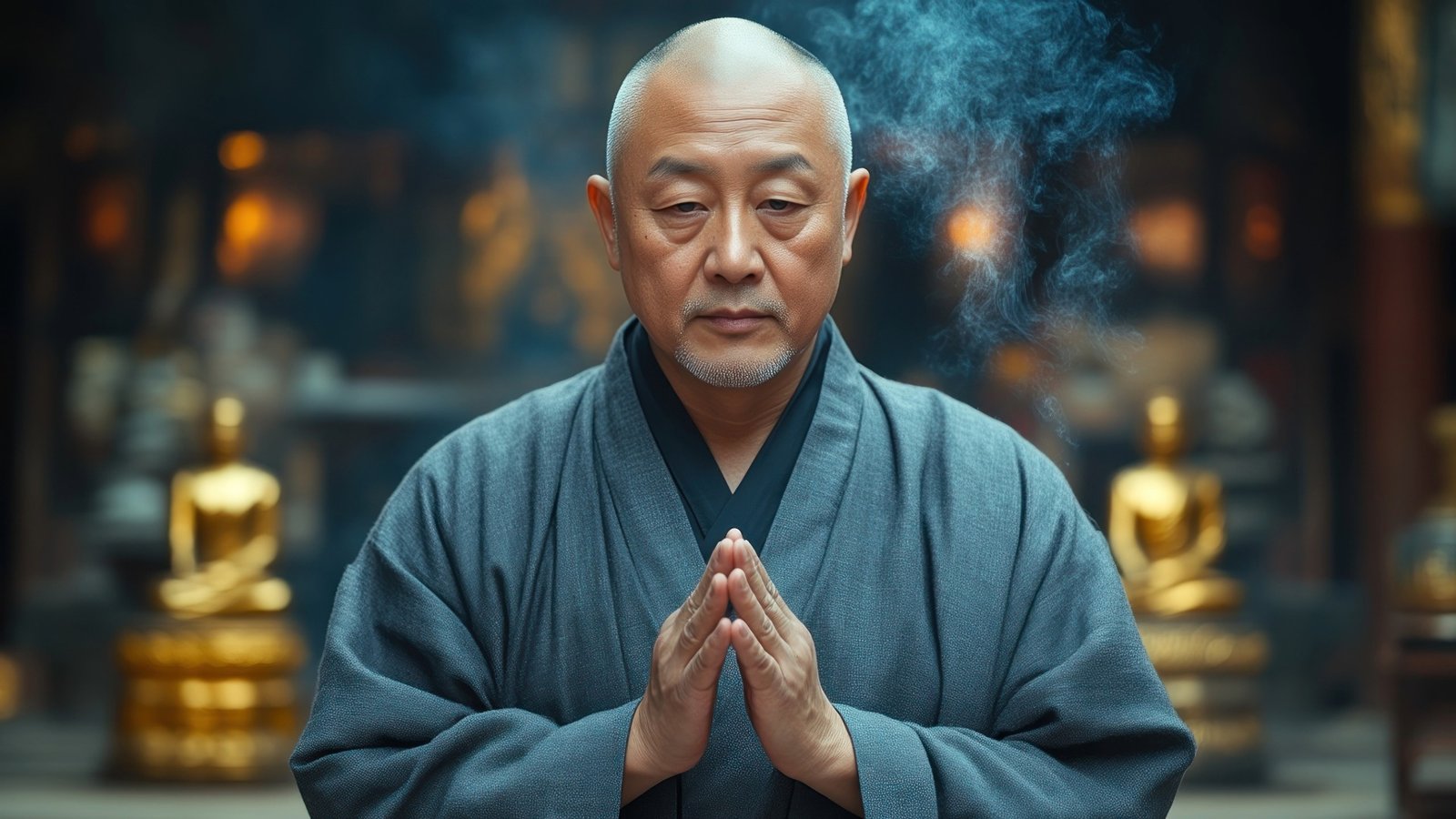
Reiki may appear simple from the outside: the practitioner becomes still, the hands soften, and the energy flows. Beneath that simplicity is a practice of presence, receptivity, and trust.
Traditional Reiki techniques help you cultivate these qualities. They teach you how to settle your mind, connect consciously with Reiki, become more aware of energetic impressions, and offer the practice without relying entirely upon personal effort.
In this chapter, you will learn six foundational techniques commonly taught within Usui Reiki traditions:
- Gassho — bringing the hands and attention together in stillness
- Joshin Kokyu Ho — using breath and awareness to become centred and receptive
- Kenyoku Ho — clearing the energy and marking the beginning or end of practice
- Hatsurei Ho — bringing several foundational techniques into a regular personal practice
- Reiji Ho — becoming receptive to guidance from Reiki
- Byosen Reikan Ho — noticing energetic sensations and areas that draw your attention
Different Reiki lineages may teach variations in wording, hand movements, breathing, and sequence. These differences do not prevent the techniques from serving their shared purpose: helping you become a clearer conduit for Reiki.
Technique Supports the Practice
Reiki does not flow because you perform a technique perfectly. The techniques prepare you to become present and receptive.
You are not manufacturing Reiki through concentration or pushing your own energy toward an animal. You are learning to quiet personal effort so that universal life-force energy can flow through you more freely.
Over time, these techniques can help you:
- Settle before offering Reiki
- Strengthen your awareness of the energy
- Develop a consistent personal practice
- Recognise subtle guidance
- Release attachment to a particular outcome
- Begin and close sessions with clarity
- Become a clearer conduit for Reiki
You do not need to use every technique in every session. Learn each one gradually, then discover which practices support you most naturally.
1. Gassho
Bringing the Hands and Mind Together
The Japanese word gassho refers to bringing the palms together. Within Reiki, it is both a hand position and a practice of gathering your attention into the present moment.
Gassho can be used before self-Reiki, before offering Reiki to an animal, during Hatsurei Ho, or as a meditation of its own.
Practising Gassho
- Sit or stand comfortably.
- Bring your palms gently together in front of your chest.
- Let your shoulders relax and your elbows rest naturally.
- Bring your attention to the place where the middle fingers meet.
- Allow your breathing to remain natural.
- When thoughts arise, notice them and return your attention to your hands.
- Remain for several minutes or for as long as feels appropriate.
You do not need to empty your mind. Each time you notice that your attention has wandered, gently return to the meeting of the fingers.
You may conclude by bringing the Five Reiki Principles to mind.
Gassho in Animal Reiki
Gassho helps you arrive before inviting an animal into the practice.
An animal may be moving around, observing you, or resting elsewhere while you sit in Gassho. They do not need to wait beside you or take part in the preparation.
Let Gassho soften your expectations. Rather than thinking, I need this animal to approach me, return to the present moment and become available to whatever form the session takes.
You may also return briefly to Gassho when the animal changes position, when you are unsure what to do next, or when you notice yourself trying to control the session.
2. Joshin Kokyu Ho
Breathing to Purify and Centre the Mind
Joshin Kokyu Ho is commonly translated as a breathing method for cleansing or purifying the mind or spirit. It brings together breath, awareness, and connection with Reiki.
The practice can help you become grounded, receptive, and energetically centred before self-Reiki or Animal Reiki.
Practising Joshin Kokyu Ho
- Sit comfortably with your spine naturally upright.
- Rest your hands on your thighs or in your lap.
- Allow your shoulders, jaw, and abdomen to soften.
- Bring your awareness to the hara, the area of the lower abdomen.
- As you inhale, imagine or sense Reiki entering through the crown of your head and flowing down to the hara.
- Rest your awareness there for a natural moment without straining.
- As you exhale, imagine Reiki expanding from the hara throughout your body and beyond you.
- Continue breathing at a gentle, comfortable rhythm.
You may use the quiet inward rhythm:
Inhale—receive.
Exhale—expand.
If visualisation does not come naturally, simply feel the breath moving while remaining open to Reiki. Vivid imagery is not required.
Let the breath remain gentle. If you become light-headed or uncomfortable, return to ordinary breathing.
Joshin Kokyu Ho in Animal Reiki
Joshin Kokyu Ho can help settle your energy before entering a shared space with an animal. Rather than arriving with hurried thoughts or a strong determination to produce a result, you return to your centre.
Practise without directing your breath toward the animal. Your breathing should remain natural and quiet, especially around animals who are sensitive to sound or movement.
As you become centred in the hara, your presence may feel steadier. This allows you to offer Reiki without chasing the animal’s attention or reacting to every movement.
3. Kenyoku Ho
Dry Bathing
Kenyoku Ho is commonly translated as “dry bathing.” It uses deliberate sweeping movements to clear the energy and mark a transition into or out of Reiki practice.
Some practitioners use Kenyoku before a session to release distractions and arrive with clarity. Others also use it afterward to close the practice and return fully to themselves.
Practising Kenyoku Ho
The movements differ among Reiki lineages. If your Reiki Master has taught you a particular form, continue with that version.
One commonly taught sequence is:
- Place your right hand near your left shoulder.
- Sweep diagonally across the front of your body toward your right hip.
- Place your left hand near your right shoulder.
- Sweep diagonally toward your left hip.
- Repeat the first movement from the left shoulder toward the right hip.
- Place your right hand near your left shoulder and sweep down the left arm toward the fingertips.
- Use your left hand to sweep down the right arm.
- Use your right hand to sweep down the left arm once more.
- Pause and notice your body, your breathing, and the space around you.
Keep the movements comfortable and intentional. They do not need to be sharp or forceful.
Within Reiki’s energetic understanding, Kenyoku may help clear unwanted energetic influences and restore a sense of separation and balance. It can also act as a simple ritual that tells the mind and body:
I am entering Reiki practice.
Or, when used at the end:
The session is complete.
Kenyoku Ho in Animal Reiki
Perform Kenyoku before entering the animal’s immediate space or while positioned at a comfortable distance. The movements are for your own preparation; they are not performed over the animal.
Move calmly so that sudden gestures do not startle an animal who is watching you.
After a session, Kenyoku can help you release your attachment to what occurred. You can appreciate the connection without continuing to mentally analyse the animal or carry the session with you throughout the day.
4. Hatsurei Ho
Cultivating Your Relationship with Reiki
Hatsurei Ho is a structured practice used to cultivate and strengthen one’s connection with Reiki. Different lineages preserve different versions, but the practice commonly brings together preparation, Kenyoku, breathing, Gassho, focused awareness, and the Reiki Principles.
Hatsurei Ho is especially valuable as a regular personal practice. It helps you become familiar with entering a receptive Reiki state even when you do not immediately feel calm, focused, or inspired.
A Level 1 Hatsurei Ho Practice
1. Arrive
Sit comfortably with your hands resting on your thighs.
Acknowledge inwardly that you are beginning Reiki practice. Let the concerns of the day rest outside this moment.
2. Practise Kenyoku Ho
Complete the dry-bathing movements taught within your lineage.
Let them mark your transition into practice.
3. Practise Joshin Kokyu Ho
Bring your attention to the hara.
Inhale and receive Reiki. Exhale and allow the energy to expand throughout and around you.
Continue until you feel centred.
4. Enter Gassho
Bring your palms together at the centre of your chest.
Rest your attention where the middle fingers meet. Allow the mind to become quieter without forcing thoughts away.
5. Become Receptive to Reiki
Remain in Gassho or rest your hands comfortably.
Allow yourself to feel, sense, or simply trust your connection with Reiki. You do not need to push energy outward or create a particular sensation.
6. Recite the Five Reiki Principles
Bring each principle to mind:
Just for today, do not anger.
Just for today, do not worry.
Just for today, be grateful.
Just for today, work honestly.
Just for today, be kind to every living thing.
Let the words enter your awareness rather than repeating them mechanically.
7. Close
Return your attention to your body and surroundings.
Take a natural breath and allow the practice to end.
Hatsurei Ho in Animal Reiki
Hatsurei Ho is primarily a practice for cultivating yourself as a Reiki practitioner. It does not need to be performed during every Animal Reiki session.
You may practise it earlier in the day, before meeting an animal, or as part of your lifelong daily Reiki practice. As the sequence becomes familiar, it can help you enter Animal Reiki with greater steadiness and less personal effort.
This inner cultivation benefits the animals with whom you practise. As you become clearer and more receptive, you are better able to offer Reiki without imposing your expectations upon them.
5. Reiji Ho
Becoming Receptive to Reiki Guidance
Reiji Ho is a practice of allowing yourself to be guided by Reiki rather than deciding every part of a session through intellectual thought.
Guidance may appear as a gentle inclination to remain where you are, change your hand position, offer Reiki from farther away, or allow the session to close.
Reiji Ho is not about performing psychic ability. It is a practice of receptivity, trust, and discernment.
Practising Reiji Ho
Step 1: Centre in Gassho
Bring your palms together in front of your chest.
Close your eyes if appropriate and allow your breathing to settle. Release mental planning and become present.
Step 2: Align with the Highest Good
Silently form an intention such as:
May this Reiki practice be for the animal’s highest good.
Release the need to decide what Reiki must accomplish. Allow yourself to serve as a conduit rather than directing the session through personal will.
Step 3: Ask for Guidance
Keeping your palms together, gently raise your hands toward your forehead or Third Eye chakra.
Silently ask for guidance:
Please guide me in offering Reiki for this animal’s highest good.
Lower your hands and notice what arises.
You may feel drawn to:
- Remain in hands-off practice
- Sit in a particular place
- Bring your hands to a certain position
- Rest one hand on your own heart
- Offer touch in an area the animal has made available
- Continue for a little longer
- Release physical contact
- Close the session
Guidance may arrive as a quiet knowing, a bodily sensation, an image, a change in attention, or a simple inclination. It may also be subtle or absent.
If nothing arises, continue with the simple Animal Reiki session structure taught in this manual. Guidance does not need to be forced.
Reiji Ho and the Animal’s Choices
In Animal Reiki, intuitive guidance and observable communication work together.
You may feel drawn to place a hand on an animal’s back, but if the animal turns away or increases the distance between you, respect that response and remain hands-off. Reiki guidance does not require you to override the animal’s choice.
The guidance may instead be inviting you to offer Reiki toward that area without touch, remain where you are, or release your original interpretation entirely.
Reiji Ho encourages trust, but trust is accompanied by humility. You can follow a gentle inner inclination while continuing to listen to the animal.
6. Byosen Reikan Ho
Sensing the Energetic Field
Byosen Reikan Ho is a traditional Reiki practice of noticing areas of energetic imbalance or places that draw the practitioner’s attention.
Practitioners may experience:
- Warmth or coolness
- Tingling or buzzing
- Pulsing
- Heaviness or lightness
- A sense of pressure
- A magnetic feeling of attraction or resistance
- A change in sensation within the hands
- An intuitive desire to remain with a particular area
These sensations vary between practitioners and sessions. Sometimes an area feels very clear; at other times, little or nothing is noticed.
Byosen develops through experience rather than effort. You learn to recognise subtle differences without demanding that a sensation appear.
Practising Byosen Reikan Ho with an Animal
Step 1: Prepare Yourself
Begin with Gassho or Reiji Ho.
Form the intention to offer Reiki for the animal’s highest good and become receptive to energetic guidance.
Step 2: Begin at the Distance Chosen by the Animal
Start with your hands resting comfortably rather than immediately moving them over the animal’s body.
Notice any sensations in your hands, body, or awareness while the animal remains in their chosen position.
You may already feel drawn toward a particular area or sense that hands-off practice is most appropriate.
Step 3: Move Closer Only When Welcomed
If the animal approaches and remains comfortable with your proximity, you may slowly bring one or both hands near the body.
You do not need to touch. Hold your hands at a comfortable distance and move only as slowly as the animal’s response allows.
With an animal who welcomes physical contact, you may also notice Byosen through gentle resting hand positions.
Step 4: Notice Energetic Changes
Become aware of differences as your hands remain near or upon various areas.
If one area feels warmer, more active, or especially drawing, you may pause and offer Reiki there. Continue for as long as the placement remains appropriate and the animal is comfortable.
If the animal shifts, moves away, or no longer welcomes the placement, release it. Reiki can continue hands-off.
Step 5: Continue or Close
When the sensation changes, your attention shifts, or the animal chooses a different position, allow the practice to move with the session.
You may return your hands to your lap, follow another gently guided placement, or close with gratitude.
Understanding Byosen Sensations
Byosen may guide you toward an area that appears to be receiving Reiki strongly. The experience can be meaningful and may deepen as your sensitivity develops.
At the same time, an energetic impression is not the same as a medical diagnosis. Warmth, tingling, or attraction toward an area does not by itself identify a disease, injury, or emotional history.
You can recognise the energetic experience without needing to label its physical cause:
My hands became warmer near the shoulder.
I felt drawn to remain near the chest.
The energy felt stronger in this position.
Then allow Reiki to flow according to the animal’s highest good.
Combining Reiji Ho, Byosen, and Animal Communication
Reiji Ho invites guidance. Byosen helps you notice energetic differences. Animal communication shows you how the animal is participating.
Together, they create a practice that is both intuitive and relational.
For example, Reiji Ho may draw your attention toward an animal’s hindquarters. As you become aware of that area, you may feel warmth in your hands. The animal may then turn so that the side of their body faces you while remaining several feet away.
You do not need to approach. You can offer Reiki hands-off from where you are, allowing the energetic guidance and the animal’s chosen distance to coexist.
In another session, an animal may position their shoulder beneath your resting hand. You may notice strong pulsing or warmth there and feel guided to remain. When the animal gets up, the placement is complete.
The energy may guide you, but the animal remains an active partner in how the session unfolds.
A Simple Foundation for Animal Reiki Sessions
You can combine these techniques into a practical sequence:
- Kenyoku Ho — clear the moment and prepare to begin.
- Joshin Kokyu Ho — settle into the hara and become centred.
- Gassho — gather your attention in stillness.
- Reiji Ho — invite guidance for the animal’s highest good.
- Offer Reiki — begin hands-off and remain receptive.
- Byosen Reikan Ho — notice energetic sensations when appropriate.
- Gassho — close with gratitude.
- Kenyoku Ho — mark the completion of the session.
This sequence is a foundation, not a rigid rule. A session may begin with one quiet moment in Gassho and unfold naturally from there.
Becoming a Clearer Conduit
These techniques are not separate tricks. Each one develops a quality within your Reiki practice:
- Gassho cultivates stillness.
- Joshin Kokyu Ho cultivates centred receptivity.
- Kenyoku Ho supports energetic clarity and transition.
- Hatsurei Ho strengthens your ongoing relationship with Reiki.
- Reiji Ho cultivates intuitive guidance.
- Byosen Reikan Ho develops energetic sensitivity.
Together, they help you release unnecessary effort and become a clearer conduit.
Becoming clear does not mean becoming perfect. You may still experience thoughts, emotions, expectations, or uncertainty. Clarity grows each time you notice that you are forcing and return to Reiki.
Return to your breath.
Return to your hands.
Return to Gassho.
Return to the Five Reiki Principles.
Return to presence.
Reiki, Animals, and Oneness
Animal Reiki can deepen your awareness that life does not exist in isolation.
You breathe the same air as the animals around you. Your life and theirs are supported by the same earth, water, sunlight, ecosystems, and universal life-force energy.
As the mind becomes quieter, the ordinary sense of separation may soften. The session may feel less like one individual sending something to another and more like resting together within a field of Reiki that already holds both of you.
This is one doorway into oneness and non-duality.
Oneness does not erase individuality. The animal retains their own body, choices, needs, and way of receiving Reiki. Interconnection and respect exist together.
The deeper your sense of connection becomes, the more naturally kindness and humility can enter your practice.
A Seven-Day Exploration
If these techniques are new to you, explore them gradually:
Day 1 — Gassho
Practise becoming still and returning your attention to your hands.
Day 2 — Joshin Kokyu Ho
Explore breath, grounding, and awareness of the hara.
Day 3 — Kenyoku Ho
Use deliberate movement to enter and close Reiki practice.
Day 4 — Hatsurei Ho
Bring the techniques together in a structured personal practice.
Day 5 — Reiji Ho
Ask for guidance during self-Reiki and notice any gentle inclinations.
Day 6 — Byosen Reikan Ho
Explore energetic differences during self-Reiki or an appropriate Animal Reiki session.
Day 7 — Integration
Choose the techniques that supported you most and combine them into a simple practice of your own.
Reflection
Consider:
- Which technique helps me become most present?
- How does awareness of the hara change my experience of Reiki?
- What do I notice before and after Kenyoku Ho?
- How might Hatsurei Ho support my lifelong practice?
- Can I distinguish intuitive guidance from personal expectation?
- How can I practise Byosen while continuing to respect an animal’s chosen distance?
- What does becoming a clearer conduit mean within my own experience?
These techniques will deepen through practice. You do not need to master them all at once.
Use them to become quieter, more receptive, and more attentive to Reiki. Then allow each animal to show you how that foundation can enter a living relationship.
In the next chapter, you will explore animal communication, choice, and boundaries—the essential language through which animals participate in Reiki practice.