

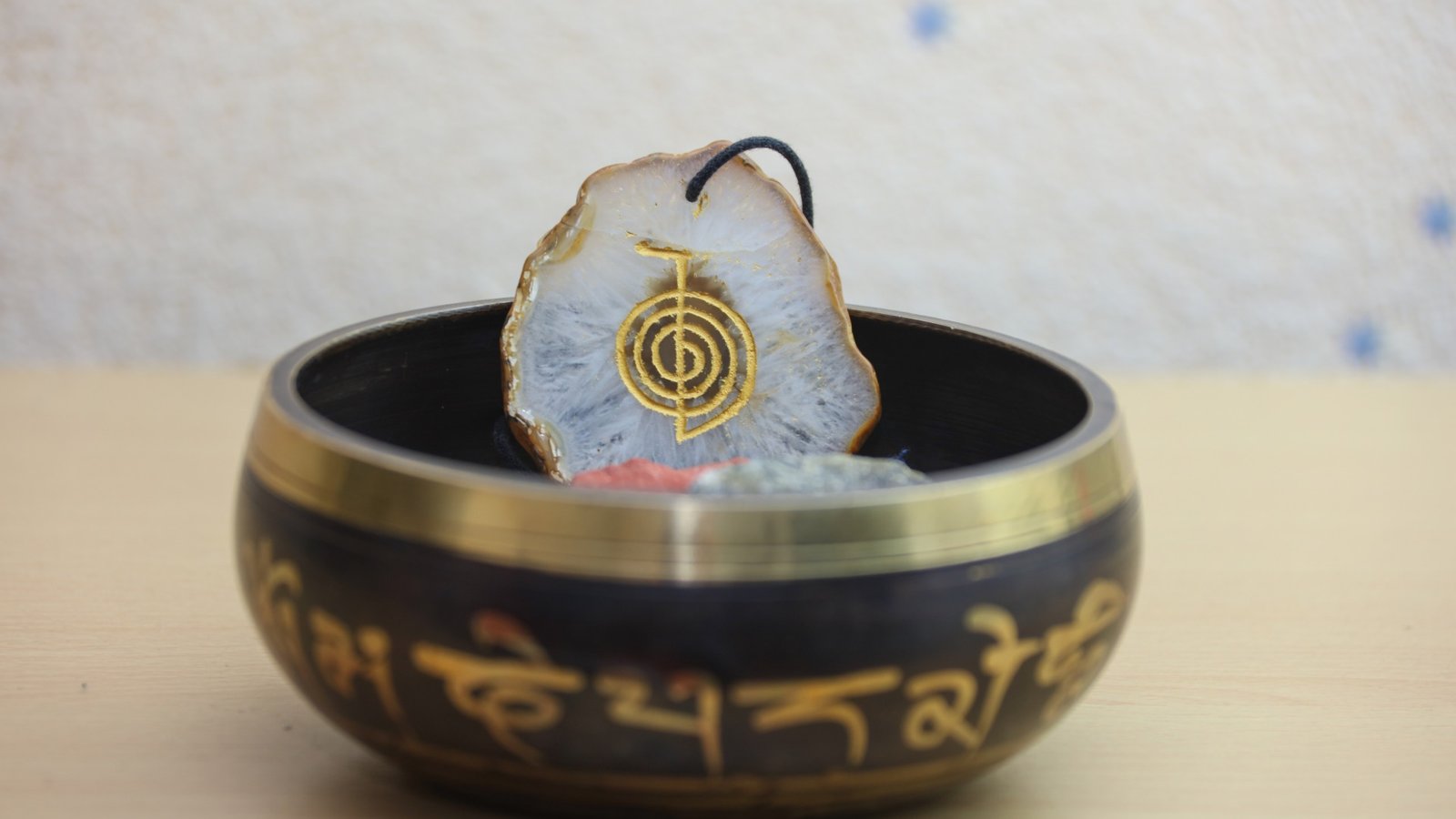
A complete distance Animal Reiki session brings together the foundations you have studied so far:
- Caregiver permission
- Respect for the animal’s autonomy
- A clear point of connection
- An appropriate Reiki intention
- The Level 2 symbols
- Presence and receptivity
- Intuitive awareness
- A clear closing
- Thoughtful documentation and communication
The steps provide a reliable structure, especially while you are learning.
With experience, your practice may become more fluid. You may develop other ways of invoking the symbols, move intuitively between parts of the session, or find that you no longer consciously rely upon every technique.
Begin with the structure. Let experience gradually deepen it.
The Complete Session Flow
A distance Animal Reiki session generally moves through the following stages:
- Receive and clarify the request.
- Confirm the animal’s identity and permission.
- Agree upon the session time and purpose.
- Select a distance method.
- Prepare your space and materials.
- Ground yourself and enter Gassho.
- Form the Reiki intention.
- Address the animal inwardly.
- Invoke the symbols and establish the connection.
- Allow Reiki to flow.
- Remain receptive to energetic and intuitive impressions.
- Recognize when the session feels complete.
- Close and release the connection.
- Ground yourself.
- Record the session.
- Follow up with the caregiver.
These stages do not need to feel mechanical. They create a container within which Reiki can unfold naturally.
Step 1 — Receive the Caregiver’s Request
Begin by understanding why the caregiver is requesting distance Reiki.
They may be seeking support for:
- General well-being
- Emotional balance
- Adjustment to a new home
- Travel or separation
- An upcoming veterinary visit
- Recovery alongside veterinary care
- Ageing
- Grief
- A stressful household change
- A specific physical concern already being evaluated
- A period of transition
- The caregiver-animal relationship
Listen without immediately deciding what the session should accomplish.
The caregiver may speak in practical terms:
My cat has been hiding since we moved.
or:
My dog is having surgery tomorrow, and I would like Reiki offered before the procedure.
The request gives the session a meaningful focus. It does not require you to promise a particular outcome.
Step 2 — Confirm the Animal’s Identity and Permission
Confirm that the requester is the animal’s caregiver or has permission to arrange the session.
Gather enough information to identify the intended animal, such as:
- The animal’s name
- Species
- General appearance
- Approximate age
- Caregiver’s name
- General location
- Photograph, if available
You do not need every detail on this list. Use enough information to establish a clear point of connection.
If several animals share the same home or appear in the same photograph, clarify which animal will receive the session.
For your own animal, a name and familiar awareness may be all you need.
Step 3 — Clarify the Purpose of the Session
The intention may include a specific concern while remaining open to holistic healing and the animal’s highest good.
For example:
May Reiki support Milo’s comfort, healing, and emotional balance as he recovers from his veterinary procedure. May he receive only what he wishes to receive, in the amount that is appropriate for him, and in the way that serves his highest good.
This intention includes the concrete reason for the session without limiting Reiki to one predetermined result.
Reiki flows where it is needed and may support the animal physically, emotionally, energetically, and spiritually.
The caregiver may sincerely hope for a particular improvement. You can hold that concern gently within the session without becoming attached to one exact outcome.
Step 4 — Agree Upon the Time
A distance session may begin immediately or take place at an agreed time.
For a scheduled session, confirm:
- The date
- Your time zone
- The caregiver’s time zone
- The corresponding start time
- The approximate session period
For example:
The session will begin at 7:00 p.m. Eastern Time, which is 4:00 p.m. Pacific Time.
The animal does not need to remain in one place during the session. The caregiver may create a calm environment if convenient, but no special arrangement is required.
If the caregiver will not be present, the session can still proceed as planned.
Step 5 — Select a Distance Method
Choose one of the methods introduced in Chapter 8:
- Photograph
- Animal’s name
- Written name and intention
- Reiki box
- Physical surrogate
- Your hands as a surrogate
- Visualization
- Beaming
You may combine methods if that supports your focus.
For example, you may use a photograph with a written intention or place the photograph beside a physical surrogate.
Choose a method before the session so that you can prepare any materials without rushing.
The method supports your attention. It does not determine the strength of the Reiki connection.
Step 6 — Prepare Your Space
Choose a place where you can practise without unnecessary interruption.
You may wish to have:
- The photograph, paper, or surrogate you intend to use
- Your Reiki journal
- A pen
- Water
- A cushion or blanket
- A timer
- Any meaningful object that supports your practice
You may light a candle, dim the room, or play gentle music if these choices help you settle. They are optional.
Place your phone on silent or use Do Not Disturb mode to minimize interruptions. If you are using the phone to display the animal’s photograph, open the image before the session and keep other notifications silenced.
Sit in a position you can maintain comfortably.
The purpose of preparing the space is to support presence, not to create a perfect ritual setting.
Step 7 — Prepare Yourself
Before connecting with the animal, offer yourself a few moments of Reiki.
Bring your hands into Gassho.
Allow your breathing to become natural.
Notice your body and the support beneath you.
Acknowledge what you are carrying into the session.
You may notice:
- Concern for the animal
- A desire for the caregiver to feel reassured
- Anxiety about doing the session correctly
- Hope for a particular outcome
- Distraction from your own day
- Emotional memories connected with the situation
You do not need to eliminate these feelings before beginning.
Recognize them, offer yourself Reiki, and let them settle sufficiently that you can approach the animal with clarity.
You may say:
I release the need to control this session. May I remain a clear, compassionate, and grounded conduit for Reiki.
Step 8 — Connect with Reiki
Remain in Gassho and turn your awareness toward Reiki.
You may recite the Five Reiki Principles or simply rest in silence.
Allow Reiki to begin flowing through you before directing your attention toward the distance connection.
This reminds you that you are not generating personal energy and sending it through force.
You are entering Reiki first.
The distance practice unfolds from that connection.
Gassho offers a familiar and reliable way to enter Reiki, but it is not the only way. As your practice advances, you may find that another Reiki technique or a simple inward connection feels more natural. Use the approach that helps you become clear, receptive, and fully present with Reiki.
Step 9 — State the Intention
State the intention aloud or inwardly.
Include:
- The animal’s name
- The specific concern, when appropriate
- Healing and well-being
- The animal’s freedom to receive
- The amount appropriate for the animal
- The highest good
For example:
I offer Reiki to Luna to support her emotional balance and adjustment to her new home. Reiki is available to her. May she receive only what she wishes to receive, in the amount that is appropriate for her, and in the way that serves her highest good.
The wording does not need to be identical in every session.
Let the intention be sincere, clear, and spacious.
Step 10 — Address the Animal Inwardly
Bring the animal gently into your awareness through the method you have chosen.
You may say:
Luna, I am offering Reiki to you with respect and compassion. You are free to receive in the way, amount, and timing that are right for you.
Pause.
You do not need to hear a response.
This inward address establishes the spirit of the offering: connection without force.
Step 11 — Invoke the Symbols
For a general distance session, you may use:
Cho Ku Rei
→ Hon Sha Ze Sho Nen
→ Cho Ku Rei
When emotional harmony is part of the intention, you may use the complete layered sequence:
Cho Ku Rei
→ Sei He Ki
→ Cho Ku Rei
→ Hon Sha Ze Sho Nen
→ Cho Ku Rei
Invoke the symbols using the method that suits your practice.
You may:
- Draw or visualize them over a photograph
- Draw or trace them over your palms
- Draw them over a written name
- Draw them over a surrogate
- Visualize them at your third-eye chakra and beam them toward the photograph, name, surrogate, or animal
- Draw them in the air
- Invoke them silently within your awareness
Silently repeat the name of each symbol three times as you draw or visualize it.
Once the sequence is complete, pause.
Allow the symbols to settle into one field of Reiki.
As your practice advances, you may discover other ways of invoking the symbols. They may arise instantly in your awareness or become part of the connection without deliberate drawing. Some experienced practitioners eventually find that they no longer consciously rely upon the symbols because their qualities have become deeply integrated into the practice.
Step 12 — Establish the Distance Connection
Allow Hon Sha Ze Sho Nen to open the connection beyond physical separation.
You do not need to imagine Reiki travelling kilometre by kilometre toward the animal.
Whether the animal is in another room or another country, the connection is established through Reiki rather than personal effort.
You may hold the photograph between your palms, rest your hands upon the surrogate, cup your hands around an imagined form, or allow your palms to remain open as you beam Reiki.
You may sense:
- Warmth
- Tingling
- Pressure
- Expansion
- Stillness
- A change in breathing
- Emotional movement
- An immediate awareness of the animal
- A subtle feeling of connection
- Very little that feels unusual
Let the connection be simple.
You do not need to test it.
Step 13 — Allow Reiki to Flow
Once the connection is established, let Reiki flow.
Release unnecessary mental effort.
You may:
- Hold the photograph between your hands
- Rest your hands beside or above it
- Move through hand positions on a surrogate
- Keep your hands open in your lap
- Place your hands over your own heart
- Beam Reiki through your palms
- Rest in meditation
- Visualize the animal surrounded by Reiki
- Allow the animal’s name to remain gently in your awareness
You do not need to repeat the intention continuously.
The intention has been established. The symbols have been invoked. You can now become receptive.
Reiki flows where it is needed and supports the animal as a whole.
Working with a Photograph
If you are using a photograph:
- Place it before you or hold it gently between your hands.
- Invoke the symbols directly over the photograph, over your palms, or through your third-eye chakra.
- Silently repeat each symbol’s name three times as you invoke it.
- Hold the photograph between your palms or rest your hands beside it.
- Allow Reiki to flow.
You may close your eyes once the connection has been established.
The photograph remains a point of focus. Reiki is offered to the animal.
Working with a Surrogate
If you are using a surrogate:
- State that the object represents the animal for this session.
- Invoke the symbols over the surrogate.
- Place your hands lightly upon or above it.
- Move through a general sequence of positions or follow intuitive guidance.
- Remain longer where Reiki feels drawn.
- Allow the practice to unfold without using the surrogate to diagnose the animal.
You may work around the surrogate’s head, chest, abdomen, back, and limbs.
Let your hands move gently and without urgency.
Working Through Beaming
If you are beaming Reiki:
- Invoke the symbols through your palms, third-eye chakra, or inner awareness.
- Allow your hands to rest open or face gently toward your chosen point of connection.
- Imagine or sense Reiki radiating naturally toward the animal.
- Keep your body relaxed.
- Avoid pushing or straining.
Reiki does not need to be projected through personal force.
Step 14 — Remain Receptive
During the session, stay open to what arises.
You may notice:
- Changes in the Reiki flow
- Sensations in your hands or body
- A feeling of warmth or coolness
- Emotional movement
- Images, colours, words, or memories
- Awareness of a particular body area
- A sense of the animal’s emotional state
- A feeling that the session has shifted
- Deep quiet
- No distinct impressions
You may allow these experiences to guide the practice.
If your attention repeatedly returns to one area while using a surrogate, you may remain there longer.
If you sense emotional unease, you may inwardly invoke Sei He Ki.
If the connection feels scattered, you may invoke Cho Ku Rei.
If no clear impression arises, continue offering Reiki without searching for one.
Intuition may provide valuable information as your practice develops. Receive it openly and hold it with discernment.
When the Mind Wanders
Your attention may drift during the session.
You may begin thinking about the caregiver, your own responsibilities, or whether the Reiki is working.
When you notice this:
- Return to your breath.
- Feel your body where you are sitting.
- Bring your awareness back to Reiki.
- Invoke Cho Ku Rei inwardly if greater focus would help.
- Continue without criticizing yourself.
Presence does not mean never becoming distracted. It means returning.
Session Length
There is no single required length for every distance Animal Reiki session.
Many practitioners work for approximately 15 to 30 minutes. Some sessions may feel complete sooner, while others may continue longer.
A session may be:
- Brief and focused
- Approximately 20 or 30 minutes
- Longer when the practice continues to flow naturally
- Divided into more than one agreed session
Do not prolong the session simply because you believe a longer session must be stronger.
Likewise, do not end immediately because you feel uncertain.
Allow enough time for the practice to settle. Then remain attentive to the natural rhythm of the Reiki flow.
The animal receives in the amount that is appropriate for them. Your task is to offer, remain present, and recognize when your role in the session feels complete.
Recognizing Completion
The session may feel complete when:
- The Reiki flow becomes much weaker
- Sensations in your hands lessen
- The connection feels settled
- You experience a clear sense of completion
- Your attention returns naturally to your surroundings
- You sense that your active role in the session is complete
- The agreed session time has been reached
The agreed duration is a valid closing point even if Reiki still feels active. You are not required to continue until every sensation has faded.
If the agreed time has passed, allow the Reiki flow another minute or two to settle. Then close the session gently and with gratitude. Reiki may continue to support the animal after your active practice has ended.
Completion may be subtle. You do not need a dramatic sign.
If you sense completion before the agreed time, remain quietly for a few moments and notice whether the session is truly settling or simply changing. You may then close early if the practice clearly feels complete.
Step 15 — Close the Reiki Flow
Allow the session to settle gradually.
You may invoke Cho Ku Rei as part of the closing practice.
Bring your hands into Gassho and say inwardly:
Thank you, Reiki. [Animal’s name], thank you for receiving Reiki in the way and amount that were right for you. This session is now complete.
Release the intention and the need to know exactly what occurred.
Closing the session does not remove Reiki from the animal. It marks the completion of your active role as practitioner.
Step 16 — Release the Distance Connection
Release the method you used.
If you worked with a photograph, place it aside.
If you used a written name, fold or store the paper appropriately.
If you used a surrogate, state that the object is no longer representing the animal.
If you used your hands as a surrogate, release that representation.
If you visualized the animal, allow the image to soften and fade.
If you used a Reiki box, close the session intentionally even if the animal’s name remains inside for a future agreed session.
You may say:
The distance Reiki connection for this session is now respectfully released.
Let your awareness return fully to your own body and environment.
Step 17 — Ground Yourself
After the session:
- Feel your feet or body against the surface beneath you
- Take several natural breaths
- Stretch
- Drink water
- Wash your hands if that supports your closing ritual
- Step outdoors
- Eat something nourishing if needed
- Rest for a few moments
Notice how you feel.
You may experience peace, energy, tiredness, emotion, or no obvious change.
Grounding helps you transition from the session into ordinary activity.
Step 18 — Record the Session
Write your notes while the experience is still fresh.
Include:
- Date
- Start and end time
- Animal’s name
- Caregiver’s name
- General location
- Reason for the session
- Method used
- Symbol sequence used
- Intention
- General experience of the Reiki flow
- Sensations
- Intuitive impressions
- Areas that drew your attention
- Emotional or visual impressions
- How the session ended
- Questions or follow-up points
Separate direct information from intuitive impressions.
For example:
Information provided by caregiver:
Luna has been hiding since moving to a new home.
Practitioner’s experience:
The Reiki flow felt strongest while my hands rested around the chest area of the surrogate. I also experienced an impression of watchfulness and emotional uncertainty.
This structure helps you remember where the information came from.
Step 19 — Follow Up with the Caregiver
Let the caregiver know that the session has been completed.
Your follow-up may include:
- The start and end time
- The method used
- The general quality of the session
- Relevant energetic or intuitive impressions
- Anything that may deserve observation
- An invitation to share what they noticed
For example:
Luna’s distance Reiki session is complete. The Reiki flow felt quiet and steady, with my attention repeatedly returning to the chest and heart area. I also sensed a gradual softening as the session continued. Please feel free to share anything you noticed before, during, or after the session.
If you sensed something related to the animal’s body, communicate within your scope:
During the session, my attention was repeatedly drawn toward Luna’s left hip. I wanted to share this in case it is helpful. You may wish to keep an eye on that area and mention it to your veterinarian if you notice anything unusual or have concerns.
Share what may be helpful without overwhelming the caregiver with every passing thought or image.
Asking About the Animal’s Experience
You may ask the caregiver:
- What did you notice during or after the session?
- Did the animal continue their usual activities?
- Did anything seem different?
- Is there anything you would like recorded for future sessions?
Use open questions rather than suggesting the response you expect.
The caregiver may report a clear change, a subtle change, or no visible difference.
All are valid reports.
After the Session
The animal may continue with their normal routine.
The caregiver can keep fresh water available and allow the animal to rest or move freely. No special response needs to be produced.
The caregiver may notice changes immediately, later that day, or over time. Reiki may also work in ways that are not outwardly obvious.
Avoid creating pressure to find evidence that the session was successful.
Let the animal’s experience unfold.
If the Session Is Interrupted
An interruption does not ruin the Reiki session.
If the interruption is brief:
- Pause.
- Attend to what is necessary.
- Ground yourself.
- Return to Gassho.
- Reconnect with the intention.
- Invoke Hon Sha Ze Sho Nen again if needed.
- Continue.
If you cannot return with adequate presence, close the session respectfully and reschedule or complete another session later.
Do not attempt to remain energetically divided between Reiki and a situation requiring your full attention.
Example — A Complete Photograph Session
A caregiver requests distance Reiki for a dog named Jasper, who is recovering at home after a veterinary procedure.
The caregiver provides:
- Jasper’s name
- A photograph
- General location
- Information about the procedure
- Permission for the session
- An agreed time
Preparation
Place Jasper’s photograph before you.
Have your journal nearby.
Sit comfortably and enter Gassho.
Offer yourself Reiki until you feel settled.
Intention
Say inwardly:
I offer Reiki to Jasper to support his comfort, healing, emotional balance, and recovery alongside his veterinary care. Reiki is available to him. May he receive only what he wishes to receive, in the amount that is appropriate for him, and in the way that serves his highest good.
Symbol Connection
Invoke:
Cho Ku Rei
→ Sei He Ki
→ Cho Ku Rei
→ Hon Sha Ze Sho Nen
→ Cho Ku Rei
Draw or visualize the sequence over the photograph, over your palms, or at your third-eye chakra and beam it onto the photograph.
Silently repeat the name of each symbol three times as you invoke it.
Reiki Offering
Hold the photograph between your palms.
Allow Reiki to flow.
Remain receptive without concentrating constantly upon the procedure or trying to determine Jasper’s medical condition.
If your attention is drawn toward an area, allow Reiki to flow there and simply notice what arises without needing to interpret it immediately.
Continue until the Reiki flow feels complete.
Closing
Thank Reiki and Jasper.
Invoke Cho Ku Rei if this belongs to your closing practice.
Release the distance connection.
Place the photograph aside and return your attention to your surroundings.
Documentation and Follow-Up
Record the session.
Send the caregiver a concise message confirming completion and sharing any relevant impressions.
The session is complete.
A Complete Session Checklist
Before the session:
- Permission confirmed
- Animal identified
- Purpose clarified
- Date and time agreed
- Time zone confirmed
- Method selected
- Materials prepared
During the session:
- Practitioner grounded
- Gassho or another familiar Reiki-centering technique used
- Reiki flowing
- Intention stated
- Animal addressed respectfully
- Symbols invoked
- Distance connection established
- Reiki offered
- Impressions received with discernment
After the session:
- Reiki flow closed
- Connection released
- Practitioner grounded
- Notes completed
- Caregiver informed
- Follow-up recorded
The checklist supports consistency. It should not prevent the session from remaining intuitive and alive.
Reflection
Consider the following questions:
- Which part of the complete session feels most natural to me?
- Which part requires more practice?
- Can I include a concrete concern without becoming attached to one outcome?
- Can I invoke the symbols without rushing?
- Do I trust the distance connection without testing it?
- Can I remain receptive when no strong sensation arises?
- How do I recognize that a session feels complete?
- Can I distinguish caregiver information from my own impressions?
- How will I communicate intuitive information clearly and responsibly?
- Can I release the connection without continuing to think about the animal energetically?
- Does my follow-up support the caregiver without creating pressure?
- What will help me offer future sessions with greater presence and ease?
A complete session is not defined by complexity.
It is defined by clear intention, respectful connection, receptive practice, and thoughtful closing.
Looking Ahead
You have now learned how to conduct a complete distance Animal Reiki session from the initial request through closing and follow-up.
The next chapter will explore Reiki across time, change, and transition.
You will learn how Hon Sha Ze Sho Nen may be used in relation to earlier experiences, future events, adoption, relocation, travel, separation, and other transitions within an animal’s life.