

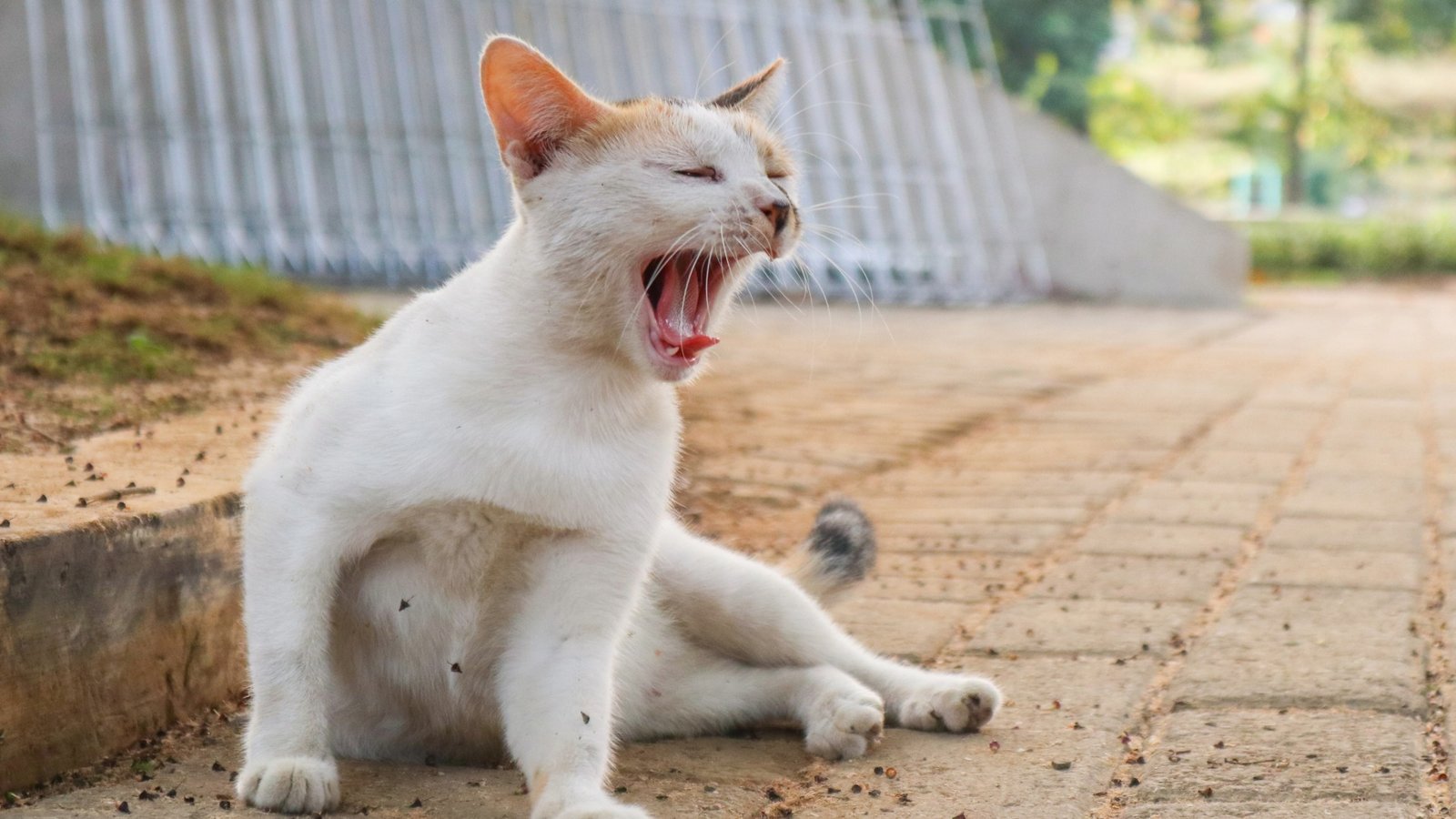
Distance Reiki can reach animals whose circumstances make ordinary in-person practice difficult, stressful, or impossible.
The animal may be fearful of people, living in a shelter, moving between foster homes, sharing space with many other animals, living freely in the wild, or missing from home.
The essential practice remains the same:
- Establish a clear connection
- Offer Reiki rather than impose it
- Allow the animal to receive the amount that is appropriate for them
- Hold the animal’s specific circumstances within a wider intention for healing and the highest good
- Continue appropriate practical care and assistance
What changes is the context in which Reiki is offered.
Animals Who Do Not Welcome Human Proximity
Some animals do not feel comfortable near unfamiliar people.
This may include animals who are:
- Fearful
- Reactive
- Feral
- Newly rescued
- Recovering from frightening experiences
- Unaccustomed to handling
- Protective of their space
- Sensitive to direct attention
- Living with pain or physical limitations
Distance Reiki allows the practitioner to support the animal without requiring physical approach.
The animal may be across the room, behind a barrier, beneath furniture, elsewhere on the property, or in another location entirely.
You do not need to enter the animal’s personal space for the Reiki session to be complete.
A suitable intention may be:
I offer Reiki to Shadow to support physical healing, emotional balance, a sense of safety, and his highest good. May he receive only what he wishes to receive, in the amount that is appropriate for him, and in the way that is right for him.
The animal does not need to become calm, social, or physically affectionate during the session.
Reiki can support the whole animal while their relationship with people continues to develop at its own pace.
Fearful and Reactive Animals
Fearful or reactive behaviour may arise from many interconnected factors, including:
- Earlier experiences
- Pain or illness
- Sensory sensitivity
- Environmental stress
- Limited socialization
- Protective instincts
- A recent change
- The animal’s individual temperament
You do not need to determine one exact cause before offering Reiki.
Sei He Ki may be included to support emotional harmony:
Cho Ku Rei
→ Sei He Ki
→ Cho Ku Rei
→ Hon Sha Ze Sho Nen
→ Cho Ku Rei
Hold the animal’s specific concern within a holistic intention.
For example:
I offer Reiki to Luna to support healing, emotional balance, and a greater sense of safety when unfamiliar people enter the home. May Reiki flow wherever it is needed and support her highest good.
This includes the concrete concern without reducing the animal to one behaviour.
Reiki may be offered alongside veterinary evaluation, reward-based training, behaviour support, environmental adjustment, and patient relationship-building.
Feral Animals
A feral animal may have little or no experience of safe physical closeness with people.
Distance Reiki is especially appropriate because it does not require capture, restraint, eye contact, or approach.
The practitioner may connect through:
- A photograph
- A name or identifying description
- A feeding location
- A shelter or resting area
- Visualization
- Awareness of the individual animal
If the animal has no name, a description may be sufficient:
The grey adult cat who rests near the garden shed at Maria’s property.
You may offer Reiki from inside a home, another part of the property, or another geographical location.
Do not physically follow the animal or change their normal movement in order to observe a Reiki response.
A distance session can remain quiet and unseen.
Newly Rescued Animals
A newly rescued animal may be moving through several changes at once:
- Leaving a previous environment
- Entering transport
- Receiving veterinary assessment
- Meeting new people
- Encountering unfamiliar animals
- Learning new routines
- Adjusting to confinement or indoor life
- Entering a foster or permanent home
Distance Reiki may support the animal throughout this transition.
You may offer Reiki in stages:
- During rescue or transport
- During veterinary care
- Upon arrival at the temporary or permanent home
- During the first days of adjustment
- As trust and routine begin to develop
An intention may be:
I offer Reiki to Sage throughout this rescue and transition. May Reiki support physical healing, emotional balance, rest, safety, and adjustment. May earlier experiences receive the healing and integration that are needed, and may this new stage of life unfold for her highest good.
The animal’s history does not need to be completely known.
Animals in Shelters
Shelters are often active environments with unfamiliar sounds, scents, people, and animals.
Distance Reiki may be offered without entering kennels, disrupting routines, or adding another unfamiliar person to the environment.
Permission should come from the shelter or someone authorized to approve the practice.
Clarify whether Reiki is being requested for:
- One animal
- Several identified animals
- A particular room or kennel area
- All animals currently housed in the facility
- Animals preparing for adoption
- An animal receiving veterinary care
For an individual animal, use their name, photograph, identification number, kennel location, or description.
For a group, define the recipients clearly:
I offer Reiki to the animals currently housed in the east kennel room at [shelter name], with the permission of the organization.
Then add:
May each animal receive only what they wish to receive, in the amount that is appropriate for them, and in the way that serves their individual highest good.
A group intention does not require every animal to receive Reiki in the same way.
Sanctuaries
Animals in sanctuaries may live with long-term physical, emotional, behavioural, or age-related needs.
They may include:
- Farmed animals
- Horses
- Wildlife unable to return to the wild
- Animals rescued from neglect
- Animals with chronic conditions
- Senior animals
- Animals who do not welcome handling
Distance Reiki can support individuals, bonded groups, herds, flocks, or the wider sanctuary environment.
Work with the sanctuary’s permission and respect its routines.
The practitioner does not need to enter enclosures or approach animals whose safety requirements they do not fully understand.
You may offer Reiki to:
- A named animal
- A specific group
- A shared resting area
- The transition of a newly arrived animal
- An animal receiving veterinary care
- The relationship among animals in a group
- The sanctuary environment as a whole
The Reiki intention may include both individual healing and harmony within the wider community.
Foster Homes
A foster animal is living within a temporary stage of care.
They may be:
- Recovering physically
- Learning household routines
- Adjusting to people
- Meeting resident animals
- Preparing for adoption
- Moving between appointments
- Awaiting decisions about their future
Distance Reiki can support the foster animal without requiring an additional visitor.
Permission may come from the organization, foster caregiver, or another authorized person, depending upon the arrangement.
An intention may be:
I offer Reiki to Finn during his time in foster care. May Reiki support healing, emotional balance, trust, rest, and preparation for the home that is right for him.
Reiki may also be offered before meetings with potential adopters or during the transition into a permanent home.
Animals in Rehabilitation Settings
Animals in veterinary rehabilitation, wildlife rehabilitation, or other recovery settings may already be receiving structured care.
Distance Reiki can be offered around that care without interrupting treatment or handling schedules.
You may work with:
- A photograph
- The animal’s identification information
- A written intention
- A scheduled time
- A surrogate
- The general location of the facility
The intention may include the particular concern while remaining open:
May Reiki support River’s physical healing, emotional balance, strength, rest, and rehabilitation following her injury.
The practitioner may receive intuitive impressions, but the rehabilitation team remains responsible for medical assessment, treatment, handling, and release decisions.
Respecting Organizational Roles
When an animal lives within a shelter, sanctuary, rescue, or rehabilitation organization, several people may be involved:
- Directors
- Care coordinators
- Veterinarians
- Veterinary technicians
- Behaviour professionals
- Foster caregivers
- Staff members
- Volunteers
Clarify who is authorizing the Reiki practice and who should receive session communication.
Follow the organization’s expectations regarding:
- Scheduling
- Privacy
- Photographs
- Session notes
- Contact with staff
- Public discussion
- Use of the organization’s name
- Follow-up
Offering Reiki to an organization’s animals does not automatically authorize you to publicly describe yourself as affiliated with that organization.
Keep communication simple, respectful, and aligned with the role you have been given.
Multi-Animal Households
A home may include several animals who share relationships, routines, resources, and space.
Distance Reiki may be offered:
- To one identified animal
- To several animals individually
- To a bonded pair
- To all animals in the household
- To the shared environment
- To the relationships among the animals
Clarify the intended recipients before beginning.
If one animal is receiving an individual session, identify them through their name, photograph, appearance, or another clear detail.
If all animals are included, you may use a group intention:
I offer Reiki to the animals living in this home. May each receive only what they wish to receive, in the amount that is appropriate for them, and in the way that serves their individual and shared highest good.
Reiki does not become divided or weakened because several animals are included.
Each animal may receive differently.
Individual Sessions Within a Multi-Animal Home
One animal may need focused support even when others share the same environment.
For example:
- One animal is recovering from a procedure
- One is newly adopted
- One is grieving
- One is preparing for travel
- One is experiencing a major life transition
Use an individual photograph, name, or written intention to clarify the recipient.
Other animals may remain nearby and may be affected by the changing atmosphere in the home, but the formal session remains focused upon the identified animal.
If you later offer Reiki to another animal, close the first connection and begin a separate practice.
This creates clarity in your intention and records.
Reiki for Relationships Among Animals
Sometimes the concern involves the relationship between animals rather than one individual alone.
Examples include:
- A new animal entering the home
- Tension over space or resources
- Reintroduction after veterinary hospitalization
- Changes in a bonded relationship
- Separation
- Grief after the death of a companion
- Adjustment within a herd, flock, or group
With permission for the animals involved, you may offer Reiki to each animal and to the relationship among them.
An intention may be:
I offer Reiki to Maple and Juniper and to the relationship between them. May Reiki support individual healing, emotional balance, communication, harmony, and the highest good of both animals.
This intention can include the caregiver’s hope for a more peaceful relationship while allowing Reiki to support the deeper needs of both animals.
Continue practical support such as gradual introductions, separate resources, appropriate supervision, and professional behavioural guidance when needed.
Bonded Animal Companions
Bonded animals may share a particularly close relationship.
Distance Reiki may be offered when:
- One animal is hospitalized
- The animals are temporarily separated
- One travels without the other
- One becomes ill
- Their routines change
- One companion dies
You may offer Reiki to each animal individually and then to their connection.
For temporary separation:
May Reiki support the loving connection between these animals while they are apart. May each receive comfort, balance, and reassurance until they are together again.
If one companion has died, Reiki may support the surviving animal’s grief, adjustment, and continuing bond.
End-of-life and bereavement support will be explored more fully in Chapter 12.
Herds, Flocks and Other Animal Groups
Distance Reiki may be offered to a herd, flock, colony, or other established group.
Possible points of connection include:
- A group photograph
- The name of the farm, sanctuary, or property
- A written description of the group
- A shared shelter, field, barn, or habitat
- A list of identified animals
- Visualization of the group within Reiki
A group intention may be:
I offer Reiki to the horses living in the north pasture at [location]. May each horse receive the healing, balance, and support that are appropriate for them, and may Reiki support harmony within the herd as a whole.
You do not need to visualize every individual animal clearly.
Hold the group within awareness while allowing each animal to receive according to their own needs.
Free-Living Wildlife
Wild animals may appear near a home, roadside, park, forest, body of water, or another natural environment.
Distance Reiki allows support without approaching, touching, feeding, capturing, or disrupting them.
You may offer Reiki to:
- An individual animal you have observed
- A family or group
- An animal who appears distressed
- Wildlife affected by environmental change
- Animals moving through migration
- A habitat or local ecosystem
When no human caregiver is responsible for the animal, offer Reiki as an open invitation.
For example:
I offer Reiki to this animal with respect. May you receive only what you wish to receive, in the amount that is appropriate for you, and in the way that serves your highest good.
Remain physically distant.
If the animal appears injured, trapped, orphaned, or in danger, contact an appropriate wildlife rehabilitator or local animal service when practical. Distance Reiki can accompany professional assistance.
Wildlife in Rehabilitation
Wildlife in rehabilitation has an organization or trained caregiver responsible for care.
Obtain permission through that person or organization.
Distance Reiki may be especially appropriate because it does not require additional handling or human contact.
The intention may include:
- Physical healing
- Emotional balance
- Rest
- Rehabilitation
- Adjustment
- Strength
- Preparation for release
- The animal’s highest good
If release is planned, Reiki may be offered before, during, and after the transition back into the wild.
Stray and Community Animals
A stray or community animal may not have one clearly identified caregiver.
You may still offer Reiki as an open, non-coercive spiritual practice while respecting the animal’s freedom.
Identify the animal as clearly as you can through:
- Appearance
- Location
- Feeding area
- Photograph
- Pattern of visits
For example:
I offer Reiki to the orange cat who visits the garden behind [location]. May this animal receive healing, balance, protection, and support in the amount and way that are right for them.
If the animal may be lost, injured, or in need of practical help, Reiki can accompany efforts to:
- Look for identification
- Contact local shelters or rescues
- Arrange veterinary help
- Provide safe assistance
- Locate a caregiver
- Follow community-animal practices appropriate to the area
Reiki and practical care can support one another.
Lost or Missing Animals
A missing animal creates intense worry for the caregiver.
Distance Reiki may be offered to support:
- The animal’s safety
- Emotional balance
- Physical well-being
- Clear movement and guidance
- Connection with helpful people
- The bond between animal and caregiver
- The search process
- A safe return, when possible and for the highest good
- The caregiver’s steadiness
Use the animal’s name, photograph, home location, and last known area as points of focus.
An intention may be:
I offer Reiki to Poppy, who is currently missing from her home. May Reiki support her safety, physical well-being, emotional balance, clear guidance, and connection with the people searching for her. May she receive only what she wishes to receive, in the amount that is appropriate for her, and in the way that serves her highest good.
You may also offer Reiki to the search situation:
May Reiki support clarity, helpful connections, timely information, and the highest good of everyone involved in bringing Poppy home.
Intuitive Impressions About a Missing Animal
A practitioner may receive intuitive impressions during Reiki for a missing animal.
These may include:
- An image
- A direction
- A type of landscape
- A sound
- A sense of distance
- A colour
- An emotional feeling
- Awareness of a possible condition
- A strong pull toward a particular area
Record the impression before analysing it.
If you share it with the caregiver, describe it as it arose:
During the session, I repeatedly received an image of a wooden structure and a sense of a quiet enclosed space. I wanted to share this in case it connects with anything in the search area.
An intuitive impression may be valuable, but it should not be presented as a guaranteed location.
Reiki Level 2 training is not, by itself, training in tracking or locating missing animals. The practitioner may offer energetic support and share impressions while the caregiver continues practical search efforts.
No one should enter private property, unsafe terrain, traffic, water, or another dangerous area solely because of an intuitive impression.
Reiki Alongside a Practical Search
Distance Reiki can accompany practical actions such as:
- Searching the surrounding area
- Contacting neighbours
- Checking shelters and veterinary clinics
- Confirming microchip information
- Sharing accurate notices
- Reviewing cameras
- Contacting local animal services or rescue groups
- Following species-appropriate search guidance
- Continuing to check likely hiding areas
The caregiver may feel overwhelmed, frightened, or exhausted.
Reiki may also be offered to the caregiver for calm, clarity, endurance, and connection, with their permission.
The practice does not need to choose between spiritual support and practical searching.
Both can continue together.
Animals Affected by Community Emergencies
Distance Reiki may also be offered to animals affected by:
- Fire
- Flood
- Severe weather
- Evacuation
- Displacement
- Transportation emergencies
- Community disruption
You may focus upon:
- An identified animal
- Animals within a shelter or evacuation centre
- A household
- A rescue group
- Wildlife in an affected area
- The wider situation
A group intention may be:
I offer Reiki to the animals affected by this emergency. May each receive healing, protection, balance, and support in the amount and way that are right for them. May Reiki also support the caregivers, rescuers, and all those working toward safety and recovery.
Distance Reiki can accompany evacuation, rescue, veterinary treatment, shelter, food, water, and other practical assistance.
Choosing an Individual or Group Practice
Before beginning, decide whether the session is intended for:
- One animal
- A bonded pair
- A household
- A herd or flock
- An organizational group
- A wildlife group
- A broader situation
An individual session allows focused attention.
A group session holds several animals within one Reiki field.
Neither is automatically better.
Choose according to:
- The request
- The available permission
- The circumstances
- The purpose of the session
- The number of animals involved
- Your ability to maintain a clear point of connection
For a group session, use wording that honours each animal individually:
May each animal receive only what they wish to receive, in the amount that is appropriate for them, and in the way that serves their own highest good.
Recording Varied Animal Sessions
Session notes may include:
- Individual or group practice
- Animal names or descriptions
- Location
- Organization or caregiver
- Method used
- Reiki intention
- Symbol sequence
- Context of the session
- Energetic impressions
- Intuitive impressions
- Practical follow-up
- Caregiver or organizational feedback
For group sessions, avoid trying to assign every sensation to a particular animal unless the impression feels clear.
You may record:
The Reiki flow felt strong and expansive across the group, with a quieter period near the end.
For an individual impression:
My attention repeatedly returned to the older bay horse standing near the shelter.
Keep the notes useful and clear.
Reflection
Consider the following questions:
- How can distance Reiki support an animal who does not welcome human proximity?
- Can I offer Reiki without expecting a fearful animal to approach or become affectionate?
- What permission is needed when working with an organization?
- Can I distinguish an individual session from a group session?
- How might Reiki support relationships among animals?
- Can I hold a herd, flock, or household without expecting every animal to receive identically?
- How can I offer Reiki to wildlife without disrupting natural behaviour?
- What practical action might accompany Reiki for a stray or injured animal?
- How would I communicate an intuitive impression about a missing animal?
- Can I support a caregiver’s hope while avoiding guarantees?
- How might Reiki accompany rescue, searching, veterinary care, or emergency assistance?
- Which varied animal situations do I feel prepared to support at this stage of my practice?
Distance Reiki can meet animals across many environments and circumstances.
Its reach becomes most meaningful when spiritual connection, practical care, humility, and compassion remain together.
Looking Ahead
You have now explored distance Reiki for fearful and feral animals, rescues and shelters, sanctuaries, foster and rehabilitation settings, multi-animal homes, bonded companions, groups, wildlife, strays, missing animals, and community emergencies.
The next chapter will focus upon senior animals, serious illness, and end-of-life support.
You will learn how Reiki may accompany ageing, physical decline, veterinary and palliative care, euthanasia, grief, and the continuing bond between animals and those who love them.