

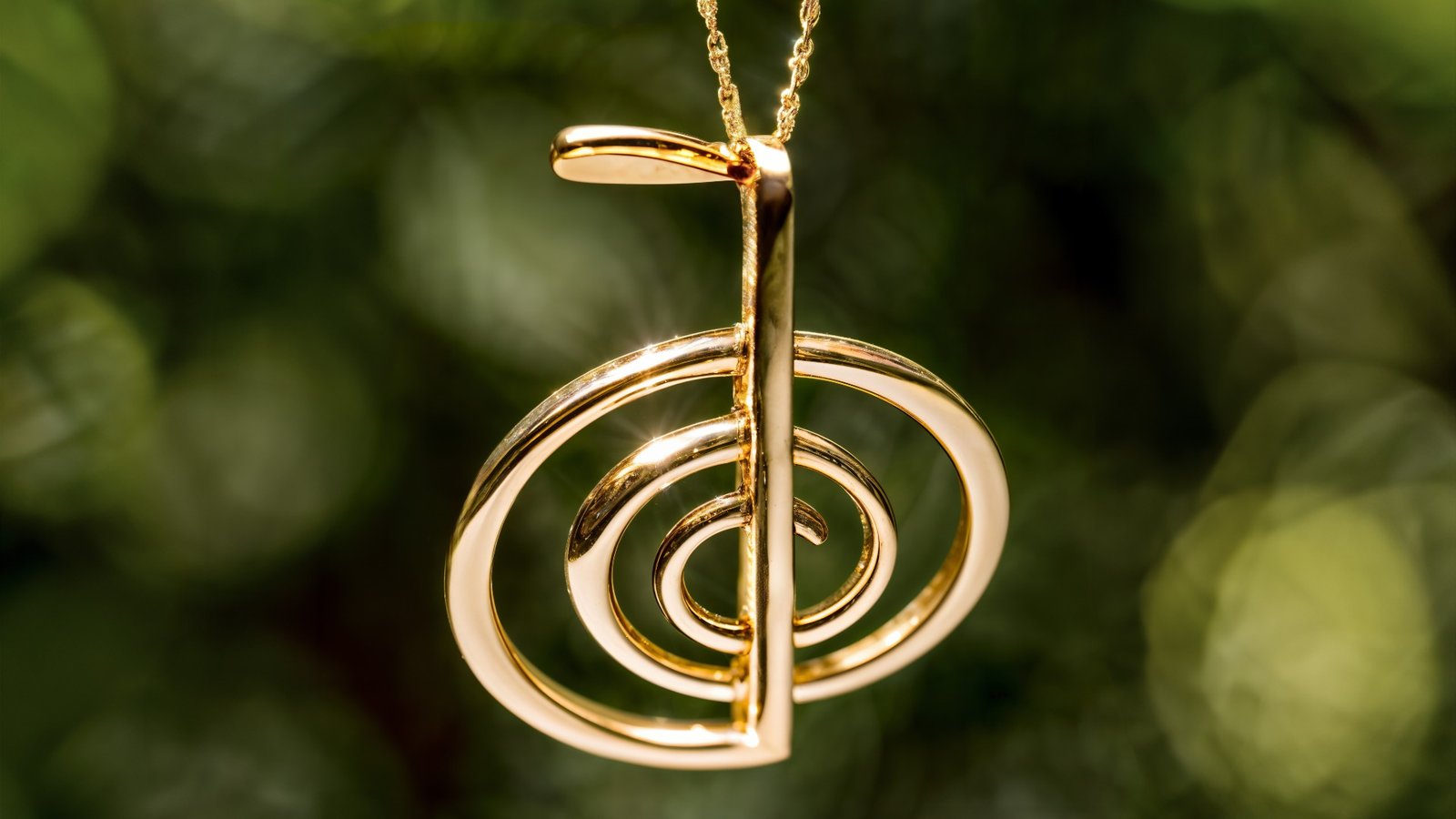
Receiving the Level 2 attunement opens your connection with the symbols. Learning their forms and names gives you a structure for invoking them.
Integration begins when the symbols enter your lived Reiki practice.
During self-Reiki, you are not only memorizing Cho Ku Rei, Sei He Ki, and Hon Sha Ze Sho Nen. You are experiencing how each symbol influences your attention, energy, emotions, and relationship with Reiki.
Over time, the symbols can move from something you consciously try to remember into something familiar and alive within your practice.
This process cannot be rushed.
You may learn the shape of a symbol in one sitting, but its deeper meaning unfolds through repetition, receptivity, reflection, and direct experience.
Why Self-Reiki Comes First
Before using the Level 2 symbols extensively with animals, begin by practising them with yourself.
Self-Reiki gives you a quiet space in which to become familiar with each symbol without needing to observe another being, communicate with a caregiver, or make decisions about a session.
Through self-practice, you can learn:
- How each symbol feels to you
- How easily you can draw or visualize it
- How the symbol affects your attention
- Which intentions help you remain open rather than controlling
- How the symbols work individually and together
- How your emotional state influences your practice
- How to release expectations when nothing dramatic occurs
- How to remain grounded when strong sensations or emotions arise
- How to close and transition out of a Level 2 practice
This personal familiarity supports your future Animal Reiki practice.
If you have only used a symbol once or twice, you may become preoccupied with remembering its shape during a session. When you have practised it consistently, the invocation can become natural, leaving more of your attention available for presence, animal choice, and the flow of Reiki.
Self-Reiki is therefore not merely preparation for the “real” work with animals.
It is real Reiki practice.
It supports your own holistic healing, strengthens your relationship with Reiki, and helps you become a clearer conduit.
What Integration Means
Integration does not mean that you must master the symbols within 21 days.
It means allowing the attunement, symbols, Reiki practice, and your everyday life to begin finding a relationship with one another.
You may notice changes such as:
- Entering Reiki practice more readily
- Feeling a clearer distinction between the symbols
- Becoming more aware of your emotional patterns
- Feeling drawn toward a particular symbol
- Experiencing greater steadiness during self-Reiki
- Recognizing when your intention has become controlling
- Becoming more comfortable with quiet or subtle sessions
- Developing a deeper sense of connection across time and space
- Feeling less dependent upon perfect visualization
- Carrying the Five Reiki Principles more consciously into daily life
Integration can also be quiet.
You may complete your daily practices without noticing a dramatic energetic change. The symbols may gradually become familiar rather than arriving through one overwhelming experience.
Quiet development is still development.
The purpose of integration is not to produce an impressive story. It is to let the symbols become part of a sincere and sustainable Reiki practice.
From Drawing a Symbol to Entering Its Quality
At first, much of your attention may be directed toward technique.
You may be thinking:
- Does this line go here?
- Did I draw the spiral in the correct direction?
- Did I repeat the name three times?
- Can I remember what comes next?
- Am I visualizing clearly enough?
This stage is natural.
Repetition gradually reduces the mental effort required. The movement of the symbol becomes familiar, its name arises more easily, and its quality may become recognizable before the drawing is complete.
Cho Ku Rei may begin to bring you quickly into focused presence.
Sei He Ki may invite a sense of emotional spaciousness or inner harmony.
Hon Sha Ze Sho Nen may open a wider awareness of connection that is not limited to the immediate physical moment.
You may also experience the symbols differently from one practice to another.
A symbol is not required to produce the same sensation every time. Its purpose is not to create a predictable physical response. It brings you into relationship with a quality of Reiki, and that relationship may express itself differently according to what is present.
Creating a Daily Practice Container
A consistent practice container helps you return to self-Reiki without waiting for ideal conditions.
You do not need a separate healing room or an elaborate ritual. Choose a place where you can sit or lie comfortably and practise with reasonable ease.
You may wish to keep nearby:
- A copy of the symbols while you are learning
- Your Reiki journal
- A pen
- Water
- A cushion or blanket
- A timer, if using one helps you relax
- A meaningful object that reminds you of your intention
Try to practise at a time that fits naturally into your life.
Some people prefer morning self-Reiki before the activities of the day begin. Others find evening practice more supportive. You may also divide your practice into shorter periods.
Consistency matters more than creating a perfect schedule.
On some days, you may have time for a complete self-Reiki session. On other days, your practice may be shorter. A brief, sincere return to Reiki can still maintain the relationship.
Do not use the daily practice requirement to punish yourself or create anxiety. Let it become a rhythm of return.
Beginning a Level 2 Self-Reiki Session
You may begin with the same foundations used in Level 1:
- Settle into a comfortable position.
- Bring your hands into Gassho.
- Allow your breath to become natural.
- Notice the support beneath your body.
- Recite or contemplate the Five Reiki Principles.
- Set a simple intention.
- Invoke the symbol or sequence you have chosen.
- Begin self-Reiki.
A general intention may be:
I open myself to Reiki for my healing, balance, and highest good. May I practise with presence, humility, and trust.
You do not need to identify everything that needs healing before you begin. Reiki can be offered to your whole being without requiring an analysis of every physical, emotional, or spiritual concern.
Practising with Cho Ku Rei
Cho Ku Rei can be used when you want to focus, activate, or strengthen self-Reiki.
It may be especially helpful when:
- Beginning your practice
- Feeling distracted or scattered
- Transitioning from daily activity into stillness
- Bringing Reiki to a particular hand position
- Preparing your hands
- Strengthening another symbol
- Closing a session
Begin in Gassho. Draw or visualize Cho Ku Rei while repeating its name three times.
You may invoke it once before the session or at several points throughout your self-Reiki practice.
For example, you may draw Cho Ku Rei over your palms before placing your hands upon your body. You may also visualize it at a hand position where you feel called to remain longer.
Allow Cho Ku Rei to gather your attention without turning concentration into strain.
Its power does not depend upon you forcing energy through your hands. Let the symbol focus the Reiki practice while you remain receptive.
A simple intention may be:
May Cho Ku Rei focus and strengthen Reiki throughout this practice for my highest good.
Practising with Sei He Ki
Sei He Ki can deepen self-Reiki when emotional harmony, mental clarity, or the integration of an experience is central to your practice.
You may use it when:
- You feel emotionally unsettled
- Your thoughts are repetitive or scattered
- You are moving through grief or change
- A situation continues to affect you emotionally
- You are developing a new habit
- You want to meet yourself with greater compassion
- You feel disconnected from your emotional life
- You wish to support harmony among mind, body, and spirit
Use the sequence:
Cho Ku Rei
→ Sei He Ki
→ Cho Ku Rei
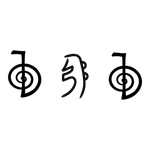
Draw the symbols one over another, repeating each name three times.
Then place your hands wherever they feel supportive. You may be drawn to the heart, head, abdomen, or another area. You may also follow your usual Level 1 self-Reiki hand positions.
You do not need to search for the cause of an emotion.
You do not need to make sadness disappear, turn anger into calm, or force yourself to forgive before you are ready. Allow Reiki to meet the emotion without judging it.
You might hold the intention:
May Reiki support emotional harmony and help me meet this experience with compassion, clarity, and balance.
If memories or emotions arise, let them be present without immediately building a story around them. Continue breathing and receiving Reiki.
The goal is not to become emotionally empty. It is to support greater harmony within the whole of your experience.
Practising with Hon Sha Ze Sho Nen
Although Hon Sha Ze Sho Nen is known as the Distance Symbol, it can also deepen personal self-Reiki.
Its relationship with time makes it especially meaningful when you wish to offer Reiki in connection with an earlier experience or an anticipated future situation.
Use the sequence:
Cho Ku Rei
→ Hon Sha Ze Sho Nen
→ Cho Ku Rei
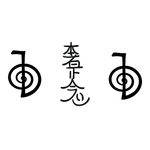
After invoking the symbols, hold the relevant time or experience gently in awareness.
Reiki in Relation to the Past
You may offer Reiki in connection with an earlier version of yourself or a past experience that continues to influence you.
This does not require reliving every detail or trying to rewrite what happened.
You might hold the intention:
May Reiki support healing and integration in my relationship with this past experience, according to my highest good.
You can imagine your present self offering compassionate Reiki presence to the person you were at that time.
You are not declaring that the historical event did not happen. You are allowing Reiki into your present relationship with that experience and, within Reiki’s spiritual understanding, offering healing beyond ordinary linear time.
Reiki in Relation to the Future
You may also offer Reiki toward an upcoming event, transition, conversation, journey, or responsibility.
You might hold:
May Reiki support me in meeting this future situation with clarity, balance, and steadiness. May the outcome unfold for the highest good.
Avoid using future Reiki as a demand that events happen exactly as you prefer.
The intention is to offer support, not to control another person, guarantee success, or remove every difficulty.
Reiki Across Your Life Path
Hon Sha Ze Sho Nen may also be used without selecting one specific event.
You may contemplate the relationship among your past, present, and unfolding future while resting in self-Reiki.
A simple intention may be:
May Reiki bring healing and harmony throughout my life path. May I meet the present moment with the wisdom of what has passed and openness toward what is still unfolding.
This can become a quiet spiritual practice of connection, forgiveness, continuity, and non-duality.
Practising with the Complete Layered Sequence
Once the individual symbols feel familiar, you may use the complete sequence introduced in Chapter 3:
Cho Ku Rei
→ Sei He Ki
→ Cho Ku Rei
→ Hon Sha Ze Sho Nen
→ Cho Ku Rei
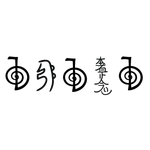
This sequence brings together:
- The activating and focusing quality of Cho Ku Rei
- The harmonizing quality of Sei He Ki
- The connecting quality of Hon Sha Ze Sho Nen
- The repeated strengthening and activation of Cho Ku Rei
After drawing the complete sequence, pause before placing your hands.
Let the symbols settle into one field of practice. You do not need to continue holding every shape in your mind.
Then begin self-Reiki.
The full sequence may be especially meaningful when your practice involves several dimensions at once. For example, you may be integrating a past emotional experience, preparing for a future transition, or seeking a deeper sense of wholeness across different periods of your life.
Do not assume that the full sequence must be used every day.
Some practices call for one symbol. Others call for two symbols framed by Cho Ku Rei. The complete sequence is available when it supports the practice, but more symbols do not automatically mean more healing.
Symbols and Self-Reiki Hand Positions
You may use the same self-Reiki hand positions you learned in Level 1.
The symbols do not require an entirely new system of hand placement.
You may:
- Follow your usual complete hand-position sequence
- Remain with a few positions that feel supportive
- Place your hands intuitively
- Practise hands-off if touch is uncomfortable
- Rest your hands beside your body
- Use one hand position for the entire session
You may invoke the chosen symbol sequence once before beginning, or you may use Cho Ku Rei at individual hand positions.
For example:
- Invoke the complete sequence at the beginning.
- Begin your usual self-Reiki hand positions.
- Invoke Cho Ku Rei again at a position where you feel called to focus.
- Continue without attempting to interpret every sensation.
- Close when the session feels complete.
Trust does not require abandoning structure. Structure and intuition can support one another.
Using the Symbols in Gassho Meditation
The symbols may also be integrated into Gassho without completing a full hand-position practice.
Sit comfortably with your hands together at the heart.
Bring your attention toward the meeting point of the middle fingers or simply rest in the feeling of your joined hands.
Invoke one symbol or a chosen sequence.
Then release the drawing and sit quietly.
You may contemplate:
- Cho Ku Rei: presence, focus, and Reiki here and now
- Sei He Ki: inner harmony and compassionate relationship with emotion
- Hon Sha Ze Sho Nen: connection beyond separation and linear time
- The complete sequence: wholeness across body, mind, emotion, spirit, distance, and time
Do not work too hard to create a particular meditative state.
The symbol opens the practice. Silence allows you to receive it.
The Symbols and the Five Reiki Principles
The Level 2 symbols may deepen your contemplation of the Five Reiki Principles.
You might invoke Cho Ku Rei before reciting the principles, allowing it to bring focus and Reiki presence into the words.
Sei He Ki may support reflection upon the emotions and habits connected with anger, worry, gratitude, honesty, and kindness.
Hon Sha Ze Sho Nen may invite you to consider how yesterday’s experiences and tomorrow’s concerns enter the present moment.
You may recite:
Just for today, I release anger.
Just for today, I release worry.
Just for today, I am grateful.
Just for today, I work honestly.
Just for today, I am kind to every living thing.
The principles are not demands for emotional perfection.
“Just for today” returns the practice to the present. It invites you to begin again without requiring that you erase every human emotion or never struggle.
The symbols can help bring Reiki into that daily return.
Allowing Emotion Without Over-Interpreting It
Level 2 self-Reiki may bring greater awareness of emotions, memories, inner conflicts, or repeated patterns.
This awareness can support healing, but it does not mean that every image, sensation, or thought contains a hidden message that must be decoded.
During practice, you may notice:
- A memory appearing unexpectedly
- An emotion becoming stronger before settling
- A feeling of relief
- A desire to cry
- A sense of resistance
- Physical warmth or movement
- A dreamlike image
- No unusual response
Let the experience be what it is.
You may write it down afterward, but avoid immediately turning it into certainty about the cause of a physical condition, the meaning of your past, or what another being feels.
Reiki can deepen intuition while discernment helps intuition remain grounded.
When You Feel Nothing
Some self-Reiki sessions feel spacious, warm, emotional, or energetically strong.
Others feel ordinary.
You may draw a symbol carefully, repeat its name, place your hands, and notice no clear difference.
Continue.
The value of self-Reiki is not limited to what you can consciously feel. Sensitivity may develop gradually, and the same practitioner may experience Reiki differently from day to day.
Avoid repeatedly checking whether Reiki is “working.” Constant evaluation can pull you out of the receptive state you are trying to enter.
Invoke the symbol.
Offer the practice.
Let the session be complete without requiring proof.
When Practice Feels Difficult
Daily practice does not always feel peaceful.
You may be tired, distracted, emotionally resistant, impatient, or short on time. You may not feel spiritually inspired.
These days can still be part of integration.
A simple practice might be:
- Enter Gassho.
- Invoke Cho Ku Rei.
- Place your hands over your heart or abdomen.
- Receive Reiki for several quiet minutes.
- Close with gratitude.
A short practice can preserve your relationship with Reiki when a longer session is not possible.
Do not confuse gentleness with inconsistency, but do not use discipline as a way to become harsh with yourself.
Return sincerely.
Journaling Without Turning Practice into a Test
A journal can help you recognize how your relationship with the symbols develops.
You may record:
- The date
- The symbol or sequence used
- Your intention
- The length or general form of the practice
- Hand positions used
- Physical sensations
- Emotions or memories
- Changes in attention or breathing
- Insights or questions
- How you felt afterward
You may also record:
I did not notice anything unusual today.
This is a complete and valid observation.
Your journal is not a collection of evidence proving that you are spiritually gifted. It is a record of practice.
Look for patterns gently. Do not turn every repeated image, sensation, animal encounter, or coincidence into a fixed message.
Moving Beyond Rigid Technique
During early practice, structure is valuable.
You learn the symbols carefully. You repeat their names. You follow the recommended sequences. You record your experience.
As familiarity grows, the practice may become more fluid.
You may begin a session with Cho Ku Rei and later feel drawn toward Sei He Ki. Hon Sha Ze Sho Nen may arise naturally when a memory enters your awareness. The complete layered sequence may become easy to visualize without drawing every line physically.
This does not mean abandoning what you were taught.
Intuition develops most reliably when it grows from a stable foundation.
First learn the forms.
Then practise the forms.
Let experience gradually reveal where flexibility supports your relationship with Reiki.
Self-Reiki and the Clear Conduit
Regular self-Reiki helps you recognize what belongs to your own inner experience.
This becomes especially important before offering Reiki to animals.
If you are carrying fear, grief, urgency, or a strong desire to rescue, those emotions may influence how you perceive the animal’s behaviour or interpret the session.
Self-Reiki does not require you to become emotionally perfect before helping an animal. It helps you become aware of what you are bringing into the space.
You can acknowledge:
- I am worried about this animal.
- I want them to improve.
- I feel helpless.
- This situation reminds me of something in my own life.
- I am attached to a particular outcome.
Then you can bring these feelings into self-Reiki rather than unconsciously placing them upon the animal.
The clearer you become about your own experience, the more freely you can allow the animal’s experience to remain their own.
When Are You Ready to Use the Symbols with Animals?
You do not need to achieve complete mastery before beginning to use the Level 2 symbols in Animal Reiki.
You are ready to begin gently when you can:
- Draw or invoke the symbols without becoming overwhelmed by the technique
- Understand the primary quality of each symbol
- Use Cho Ku Rei to activate another symbol
- Choose a simple sequence appropriate to the practice
- Set an intention without demanding an outcome
- Remain grounded when sensations are subtle
- Recognize your own emotional expectations
- Respect animal choice and freedom of movement
- Release the symbols and close the session
- Continue your own self-Reiki alongside practice with animals
Begin with familiar animals and simple situations.
You might invoke Cho Ku Rei before sitting quietly with your own animal. Later, you may introduce the emotional sequence or the complete layered sequence when it feels appropriate.
Let confidence grow through practice rather than performance.
The 21 Days and Beyond
The 21-day integration period provides a focused container for daily self-Reiki and symbol practice.
Completing it is meaningful, but it does not mark the end of integration.
The symbols may continue revealing new dimensions through months and years of practice. Your relationship with them may change as your life changes, your self-awareness deepens, and your experience with animals grows.
Lifelong daily self-Reiki is highly recommended.
It supports your own holistic healing, maintains your relationship with Reiki, deepens your understanding of the symbols, and helps you remain a clear conduit.
A practitioner who continues returning to self-Reiki is continually returning to humility.
You remember that Reiki is not something you only offer outwardly.
You also receive.
Reflection
Consider the following questions:
- How has self-Reiki changed since receiving the Level 2 attunement?
- Which symbol feels most familiar to me?
- Which symbol still requires greater attention?
- How does Cho Ku Rei affect my focus during practice?
- What happens when I bring Sei He Ki into an emotional experience?
- How do I understand Hon Sha Ze Sho Nen within personal self-Reiki?
- Do I tend to force meaning upon sensations, images, or emotions?
- Can I allow a quiet practice to be complete?
- Which symbol sequence best supports my current needs?
- What expectations do I bring into Reiki practice?
- How does self-Reiki help me distinguish my experience from an animal’s?
- What would a sustainable lifelong self-Reiki practice look like for me?
Let the answers remain open.
Integration is not a conclusion. It is the gradual deepening of relationship.
Looking Ahead
You have begun developing a personal relationship with Cho Ku Rei, Sei He Ki, and Hon Sha Ze Sho Nen through self-Reiki.
In the next chapter, you will explore using the Level 2 symbols with animals.
You will learn how to invoke the symbols without imposing them, how to choose an appropriate symbol or sequence, how to incorporate them into hands-off and welcomed-touch practice, and how to continue following the animal rather than a rigid formula.
The symbols may deepen the session.
The animal remains your guide in how the session unfolds.